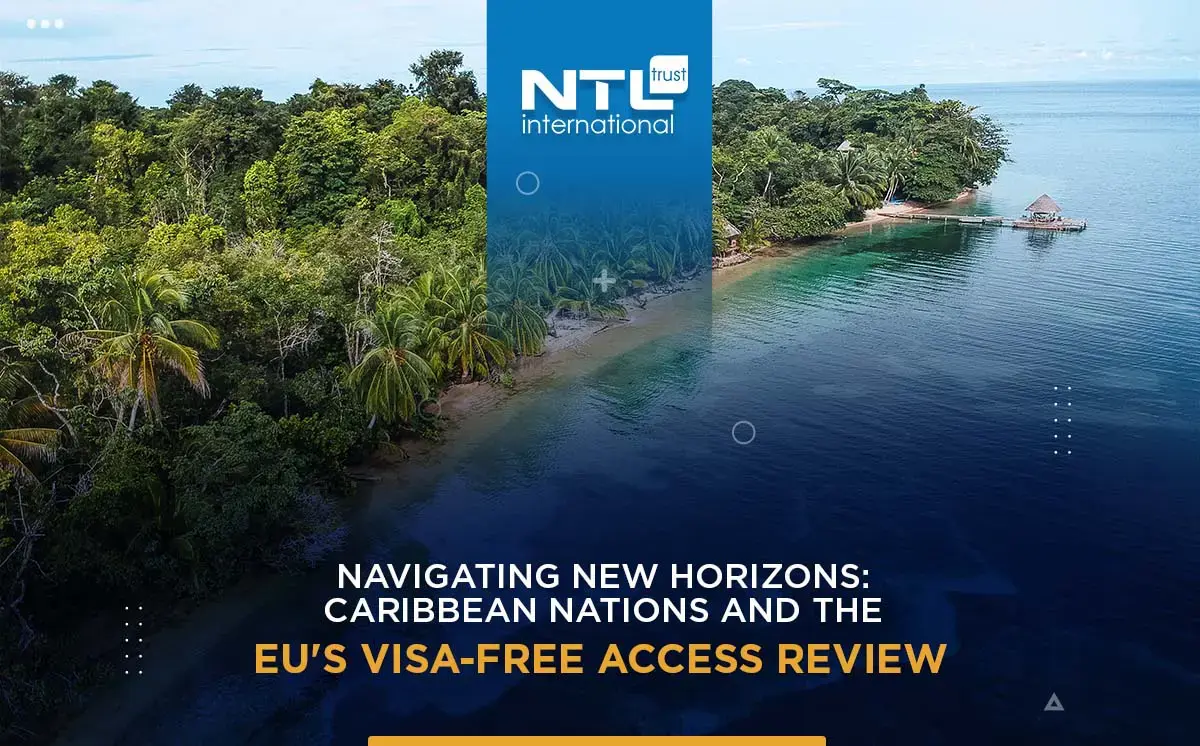
Navigating New Horizons:
Caribbean Nations and the EU’s Visa-Free Access Review
In recent discussions, the potential for the European Union (EU) to adjust its visa-free agreements with Caribbean nations offering Citizenship by Investment (CBI) programs has come to the forefront.
This development is rooted in concerns over security and transparency within these programs.
The EU’s considerations reflect a broader dialogue on the integrity of international travel systems and the importance of stringent vetting processes.
The Implications and Opportunities to the Caribbean nations:
While the prospect of restricted visa-free access presents challenges, it also opens a doorway to significant opportunities for Caribbean nations.
By addressing the EU’s concerns, these countries can enhance the global perception of their CBI programs, demonstrating a commitment to high standards of due diligence and transparency.
This process could not only satisfy EU requirements but also attract a reputable clientele, thereby strengthening the programs’ integrity. Moreover, this situation underscores the importance of economic diversification for Caribbean nations.
Lessening dependence on CBI programs by investing in other sectors – such as renewable energy, digital services, and sustainable tourism – could provide more resilient revenue streams.
Such diversification efforts would contribute to a more stable economic future, reducing vulnerability to international policy shifts.
Read more: CARIFTA Games
Strategic Actions for Caribbean Nations:
To navigate these challenges effectively, Caribbean countries are encouraged to undertake several key actions:
- Enhance Program Transparency: Implementing robust vetting processes and improving transparency around the issuance of citizenship through investment can address security concerns and build trust in these programs.
- Engage in Constructive Dialogue: Proactive engagement with the EU to understand and address concerns, and negotiate terms, is crucial. Diplomatic efforts can pave the way for mutual understanding and potentially prevent restrictive measures.
- Foster Regional Collaboration: A unified approach to standardizing CBI program practices across the Caribbean can strengthen the region’s position in negotiations and ensure consistency in addressing international standards.
Read more: The CARICOM convention
- Prioritize Economic Diversification: By focusing on the development of alternative economic sectors, Caribbean nations can reduce their reliance on CBI programs and build a more diversified and sustainable economic base.
- Strengthen Legal Frameworks: Updating legal frameworks to better combat money laundering and financial crimes will further align Caribbean CBI programs with international best practices, addressing some of the EU’s critical concerns.
The potential review of visa-free access by the EU presents both a challenge and an opportunity for Caribbean nations. By taking proactive steps to reform CBI programs, engage diplomatically with international partners, and pursue economic diversification, the Caribbean can turn this challenge into a catalyst for growth and development.This moment calls for strategic action, collaboration, and innovation to ensure that Caribbean nations continue to thrive in an ever-evolving global landscape.

Nauru Is Now the Republic of Naoero: What It Means for the Citizenship Program
The Republic of Nauru has officially adopted the name Republic of Naoero. Citizenship Certificates now bear the new name; passports remain issued as Nauru during the transition.

EU Caribbean CBI Phase-Out by 2028: What the Visa Suspension Mechanism Means for Investors
The EU’s revised Visa Suspension Mechanism now treats CBI programme operation itself as suspension grounds. Antigua & Barbuda, Dominica, Grenada, St Kitts & Nevis, and Saint Lucia have reportedly been asked to phase out by 1 June 2028.

UAE Tourist Identity: Instant Digital Bank Account Launch
The Central Bank of the UAE, ICP, and ADCB have launched a digital identity-linked banking service allowing non-resident visitors to open an account and receive a debit card within minutes of arrival.

Best Residency by Investment Programs 2026
Compare 10 residency by investment programs in 2026: Greece, UAE, Portugal, Malta, Hungary, Germany, Latvia, Cyprus, USA EB-5, Türkiye. Analysis by NTL International.

EU Entry/Exit System and UK ETA: New 2026 Border Requirements for RBI Applicants
New EU and UK border systems mean RBI applicants traveling for property viewings, biometric appointments, or permit collection should plan for longer first-entry processing and confirm UK ETA status before departure.