Republic of Nauru: The World's Smallest Republic and an Exceptional Destination for Investment and Life
Key Takeaways
- The Republic of Nauru is the world's third smallest country (21 km²) and smallest republic, located in the Central Pacific Ocean south of the equator.
- Once one of the wealthiest nations per capita due to phosphate mining, Nauru has diversified its economy through offshore banking reform, fisheries, and, most recently, its citizenship by investment programme.
- Nauru launched the NECRCP in 2024; under the Iruwa Initiative, single applicants may qualify from USD 90,000 until June 30, 2026.
- The Nauruan passport provides visa-free or visa-on-arrival access to approximately 100 countries and territories.
- Nauru maintains a unique matrilineal social structure and is an active member of the Commonwealth, the Pacific Islands Forum, and the United Nations.
The Republic of Nauru is the world's smallest republic, a 21 km² raised coral island in the Central Pacific. Once wealthy from phosphate exports, Nauru now diversifies through fisheries and its NECRCP citizenship by investment programme, with single-applicant investment starting at USD 90,000 under the Iruwa Initiative. NTL, as a government-authorized agent, guides qualified investors through the application process.
"Nauru represents one of the most distinctive sovereign nations in the CBI landscape. Its Pacific location, Commonwealth membership, and compact governance structure create a programme with characteristics that differ meaningfully from Caribbean alternatives. Investors who take the time to understand the republic's unique context will find a compelling case for portfolio diversification."
The Republic of Nauru, the world's smallest republic and third smallest sovereign state, is a destination that defies expectations. Situated in the vast Central Pacific Ocean just 42 kilometres south of the equator, this 21-square-kilometre raised coral island has witnessed dramatic transformations across centuries of habitation, colonial rule, post-independence prosperity, economic upheaval, and, most recently, strategic reinvention through new economic programmes.
While Nauru may not appear on most travellers' radar, it occupies a significant position in the contemporary investment migration landscape. The republic's decision to establish its Citizenship by Investment Programme in 2024 marked a new chapter in Nauru's economic strategy, one rooted in both fiscal sustainability and climate resilience. For investors, entrepreneurs, and those seeking a deeper understanding of the Pacific region, Nauru offers a story unlike any other.
This article explores Nauru as a country: its geography, history, culture, governance, and economic trajectory, providing the context necessary to understand why this remarkable island nation has become a point of interest for global investors.
| Attribute | Detail |
|---|---|
| Official Name | Republic of Nauru |
| Location | Central Pacific Ocean, 42 km south of the equator |
| Area | 21 km² (8.1 sq mi) |
| Population | Approximately 10,600 |
| Capital | Yaren (de facto administrative centre; no official capital) |
| Languages | Nauruan (Micronesian), English |
| Government | Parliamentary republic (19-member parliament) |
| Independence | January 31, 1968 (from Australia/UN trusteeship) |
| Currency | Australian Dollar (AUD) |
| Membership | United Nations, Commonwealth, Pacific Islands Forum |
| Passport Visa-Free Access | ~100 countries and territories |
Geography and Physical Landscape
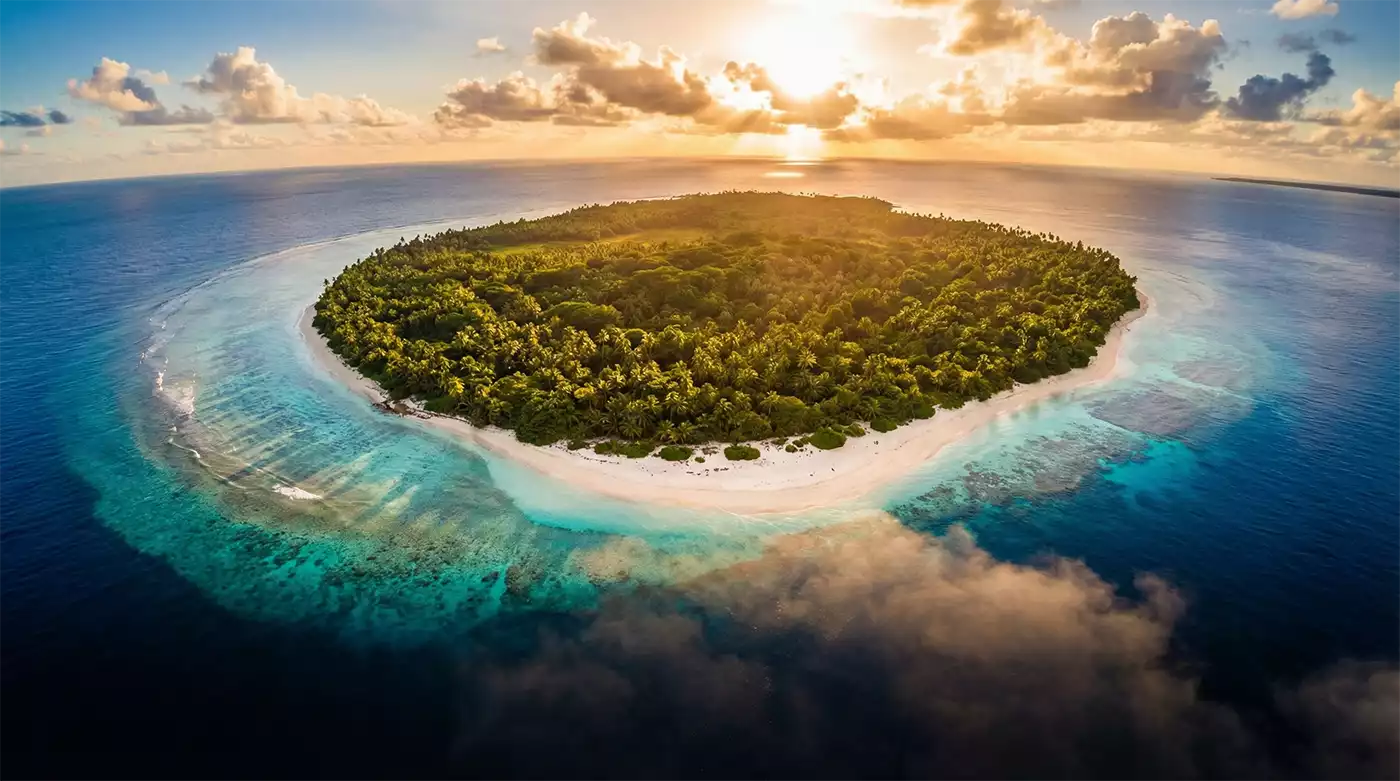
Nauru is a single raised coral atoll situated in the Micronesia sub-region of the Pacific Ocean, northeast of the Solomon Islands and approximately 4,000 kilometres northeast of Sydney, Australia. It is one of only three raised coral phosphate rock islands in the Pacific, alongside Banaba (Kiribati) and Makatea (French Polynesia).
The island is roughly oval in shape, measuring approximately 6 kilometres in length and 4 kilometres in width. A narrow coastal plain of fertile land, ranging from 100 to 300 metres wide, encircles the island. Beyond this strip, a coral cliff rises to a central plateau known as "Topside," which reaches a maximum elevation of approximately 71 metres above sea level at Command Ridge, the island's highest point.
Nauru's coral reef extends outward from the shoreline and is exposed at low tide, creating natural tidal pools and a distinctive underwater ecosystem. The island has no rivers or streams; freshwater is scarce and historically sourced from limited underground aquifers and, increasingly, desalination facilities. Buada Lagoon, a small inland body of brackish water surrounded by vegetation, is the only significant body of water on the island and holds cultural significance for Nauruans.
The climate is tropical, hot, and humid year-round, with temperatures averaging 27°C to 32°C. The wet season runs from November through February, influenced by the monsoon belt and the Western Pacific Monsoon. Nauru lies within the typhoon belt but rarely experiences direct cyclone hits due to its proximity to the equator.
Historical Journey: From Ancient Settlement to Independence
Early Settlement and Pre-Colonial Society
Archaeological and linguistic evidence suggests that Nauru was first settled by Micronesian and Polynesian navigators approximately 3,000 years ago. The island developed a social structure organized around 12 tribal clans (still reflected in the 12-pointed star on the national flag), with a matrilineal system governing kinship, land rights, and inheritance. This clan-based society sustained itself through fishing, coconut cultivation, and the harvesting of pandanus fruit.
European Contact and Colonial Era
British whaling captain John Fearn became the first European to sight Nauru in 1798, naming it "Pleasant Island" for its agreeable appearance from the sea. Sporadic contact with European traders and beachcombers followed throughout the nineteenth century, bringing firearms and alcohol that destabilized the traditional clan balance and contributed to a decade-long civil conflict known as the Nauruan Tribal War (1878 to 1888).
Germany formally annexed Nauru in 1888, incorporating it into the Marshall Islands Protectorate. The discovery of phosphate deposits in 1900 by the Pacific Islands Company transformed Nauru's trajectory entirely. Australia, New Zealand, and the United Kingdom assumed joint control under a League of Nations mandate following World War I, and phosphate extraction became the island's defining economic activity.
Japanese Occupation and Post-War Trusteeship
During World War II, Japan occupied Nauru from 1942 to 1945. The occupation was devastating: 1,200 Nauruans, roughly two-thirds of the population at the time, were forcibly deported to the Truk Islands (now Chuuk, Federated States of Micronesia), where many perished. The survivors returned after the war to find their island severely damaged by bombardment and military construction.
After the war, Nauru became a United Nations Trust Territory administered by Australia, with New Zealand and the United Kingdom as co-trustees. The British Phosphate Commissioners continued extraction operations, directing the overwhelming majority of revenue away from the island.
Independence
Nauru gained full independence on January 31, 1968, under the leadership of Hammer DeRoburt, who became the republic's first president. Nauru simultaneously gained control of its phosphate assets, ushering in a period of extraordinary per-capita wealth.
Governance and Political Structure
Nauru operates as a parliamentary republic. The Parliament of Nauru consists of 19 members elected from eight multi-member constituencies, serving three-year terms. There are no formal political parties; members stand as independents and form alliances after election. The President of Nauru, who serves as both head of state and head of government, is elected by parliament from among its members.
Nauru has no official capital city. Yaren, the district where the parliament building, government offices, the international airport (Nauru International Airport, INU), and the central telecommunications infrastructure are located, functions as the de facto administrative centre.
The legal system combines elements of English common law with local customary law. The Supreme Court of Nauru is the highest court, with the option of appeal to the High Court of Australia under a bilateral arrangement. District courts handle routine matters, and traditional mediation remains important for local disputes.
Society, Culture, and Language
Nauru's population of approximately 10,600 is predominantly indigenous Nauruan, with smaller communities of other Pacific Islander, Chinese, and European descent. The indigenous Nauruan people are ethnically Micronesian with some Polynesian heritage, reflecting the island's settlement history.
The Nauruan language (dorerin Naoero) is a distinct Micronesian language that stands as an isolate within the Austronesian family, meaning it has no close linguistic relatives. English is the second official language and the primary medium for government, education, and international commerce.
Nauruan society is structured around a matrilineal system: lineage, clan membership, and traditional land rights are passed through the maternal line. The 12 clans that form the foundation of Nauruan social organization predate European contact and remain culturally significant. Christianity, introduced by missionaries in the late nineteenth century, is now the dominant religion, with the Nauru Congregational Church and the Roman Catholic Church being the largest denominations.
Traditional Nauruan culture celebrates fishing, canoe building, and a distinctive form of weight-based sport that reflects historical values of abundance and prosperity. Independence Day (January 31) and Angam Day (October 26), which commemorates the population reaching 1,500 after near-extinction events, are the most significant national celebrations.
Economy: From Phosphate Wealth to Diversification
The Phosphate Boom and Bust
For much of the twentieth century, Nauru's economy was dominated by phosphate mining. During the 1970s and 1980s, Nauru briefly recorded one of the highest per-capita incomes in the world. The government established the Nauru Phosphate Royalties Trust (NPRT) to invest mining revenues for future generations, placing funds in real estate, shipping, and various international investments.
However, the trust's investments were plagued by mismanagement and poor returns. By the early 2000s, with phosphate reserves largely depleted and the trust fund virtually exhausted, Nauru faced a severe fiscal and economic crisis. Infrastructure deteriorated, public services contracted, and the government accumulated significant debt.
Economic Restructuring and New Revenue Streams
Nauru has pursued several strategies to rebuild its economic base. Offshore banking, which briefly emerged in the late 1990s, was reformed and largely discontinued under international pressure following concerns about money laundering. Fishing license fees from Nauru's Exclusive Economic Zone (EEZ), which covers approximately 320,000 square kilometres of Pacific Ocean, now represent a significant revenue source, particularly through the Parties to the Nauru Agreement (PNA) vessel day scheme for tuna fisheries.
Australia's Regional Processing Centre on Nauru, established in 2001 for offshore processing of asylum seekers, provided substantial government revenue and employment for a period, although its long-term future has been subject to shifting Australian migration policy.
Most recently, Nauru has turned to citizenship by investment as a mechanism for sustainable revenue generation and economic diversification.
Nauru's Citizenship by Investment Programme
In 2024, the Government of Nauru formally launched the Nauru Economic and Climate Resilience Citizenship Programme (NECRCP), establishing a legal framework for qualified investors to obtain Nauruan citizenship through an economic contribution. The programme is distinctive in that it explicitly ties investment revenue to both fiscal stability and climate adaptation, reflecting Nauru's acute vulnerability to rising sea levels as a low-lying Pacific island state.
| Programme Detail | Specification |
|---|---|
| Programme Name | Nauru Economic and Climate Resilience Citizenship Programme (NECRCP) |
| Standard Investment (Single Applicant) | USD 105,000 / USD 115,000 |
| Iruwa Initiative (Discounted) | USD 90,000 (single applicant), valid until June 30, 2026 |
| Dependent Fee | USD 2,000 per dependent |
| Sibling Supplement | USD 15,000 |
| Legal Basis | Government Gazette No. 118/2026 |
| Passport Visa-Free Access | ~100 countries and territories |
| Dual Citizenship | Permitted |
| Physical Residency Requirement | None |
The Iruwa Initiative, a time-limited promotional window, reduces the single-applicant contribution to USD 90,000, down from the standard rates of USD 105,000 or USD 115,000. This incentive is scheduled to remain available until June 30, 2026, as published in Government Gazette No. 118/2026. The programme operates on an individual-based fee model, with each additional dependent incurring USD 2,000 and a sibling supplement set at USD 15,000.
NTL is a government-authorized agent for the Nauru Citizenship by Investment Programme. For investors exploring Pacific CBI options, NTL provides eligibility assessment, documentation preparation, due diligence coordination, and post-approval guidance through the entire process. A detailed analysis of how Nauru compares to Caribbean CBI programmes is available for those evaluating multiple jurisdictions.
Health, Education, and Social Challenges
Nauru faces significant public health challenges. The World Health Organization has documented some of the highest rates of obesity and type 2 diabetes globally among Nauruan adults, driven by a shift from traditional diets of fish and coconut to imported, processed foods during the phosphate boom era. Cardiovascular disease is a leading cause of mortality.
Healthcare is provided through the Republic of Nauru Hospital, the island's sole hospital, with cases requiring specialist treatment typically referred to Australian hospitals under bilateral agreements. Infant mortality, while improving, remains above the regional Pacific average.
Education follows the Australian curriculum, with compulsory schooling from ages 6 to 16. The University of the South Pacific maintains a campus on Nauru, and government scholarships support Nauruan students studying in Australia, New Zealand, and Fiji. Improving educational outcomes and training a skilled domestic workforce remain priorities for the government.
Nauru in the International Community
Despite its small size, Nauru maintains an active presence in international affairs. The republic is a full member of the United Nations (admitted in 1999), the Commonwealth of Nations, the Pacific Islands Forum, the Asian Development Bank, and the International Monetary Fund.
Nauru has been a vocal advocate on climate change within international forums, emphasizing the existential threat that rising sea levels pose to low-lying Pacific states. This advocacy has been central to the republic's positioning of its citizenship programme as a climate resilience mechanism, using investment revenue to fund infrastructure adaptation and environmental protection measures.
The Nauruan passport provides visa-free or visa-on-arrival access to approximately 100 countries and territories, with coverage spanning the Pacific, parts of Asia, Africa, and select European destinations. A comprehensive breakdown of visa-free destinations available with a Nauru passport is available for prospective applicants.
A Destination Worth Discovering
Nauru is not a mass tourism destination, and that is part of its appeal for adventurous travellers and those seeking genuine cultural immersion. The island's compact size means that most points of interest are reachable within minutes by car or on foot.
Key attractions include Buada Lagoon, a serene inland water body surrounded by tropical vegetation; Command Ridge, the highest point on the island with panoramic views of the Pacific; the remnants of Japanese World War II fortifications, including gun emplacements and bunkers; and the coral pinnacles of the mined-out Topside plateau, which present a stark but striking landscape unlike anything else on Earth.
The fringing coral reef supports snorkelling and diving opportunities, with marine biodiversity including reef sharks, sea turtles, and vibrant coral formations. Nauru International Airport (INU) is served by Nauru Airlines, which operates scheduled flights to Brisbane (Australia), Nadi (Fiji), Tarawa (Kiribati), and Majuro (Marshall Islands).
For those who value authenticity over amenity, Nauru offers an experience that is difficult to replicate elsewhere: a sovereign Pacific nation with a living culture, a complex modern history, and a landscape that tells its own story.
Frequently Asked Questions
Where is the Republic of Nauru located?
Nauru is a single raised coral island located in the Central Pacific Ocean, approximately 42 kilometres south of the equator. It lies northeast of the Solomon Islands and is part of the Micronesia sub-region. The nearest significant landmass is Banaba Island (Kiribati), approximately 300 kilometres to the east.
What is the population and area of Nauru?
Nauru has a population of approximately 10,600 people and covers just 21 square kilometres (8.1 square miles), making it the third smallest country in the world after Vatican City and Monaco, and the smallest republic.
Does Nauru have a citizenship by investment programme?
Yes. Nauru launched the Nauru Economic and Climate Resilience Citizenship Programme (NECRCP) in 2024. Under the Iruwa Initiative, single applicants may qualify from USD 90,000 (discounted from the standard USD 105,000/USD 115,000) until June 30, 2026, per Government Gazette No. 118/2026. NTL is a government-authorized agent for this programme.
How many countries can Nauru passport holders visit visa-free?
Nauru passport holders can access approximately 100 countries and territories visa-free or with visa-on-arrival, including destinations across the Pacific, Asia, and Africa. For a full destination list, see NTL's Nauru passport visa-free travel guide.
What language is spoken in Nauru?
Nauru has two official languages: Nauruan (dorerin Naoero), a Micronesian language, and English. English is widely used in government proceedings, education, and international commerce. The Nauruan language is an isolate within the Austronesian family with no close linguistic relatives.
Related Reading
- Nauru Citizenship by Investment Programme: Complete Guide
- Caribbean CBI vs Nauru CBI: A Comparative Analysis
- Visa-Free Travel with a Nauru Passport: Where Can You Go?
- Nauru Citizenship 2026: Major Regulatory Updates
- Why Every Investor Needs a Plan B: Crisis Preparedness Through CBI and RBI
- Vanuatu Citizenship by Investment Programme
Conclusion
The Republic of Nauru is far more than a geographic curiosity. It is a sovereign Pacific nation with a complex history, a resilient population, and a forward-looking economic strategy that includes one of the newest citizenship by investment programmes in the world. Understanding Nauru as a country, its geography, its cultural fabric, and its economic transformation, is essential context for any investor evaluating its CBI programme.
For qualified investors interested in exploring Nauruan citizenship, NTL provides comprehensive guidance as a government-authorized agent, from initial eligibility assessment through to post-approval support.
Schedule Your Consultation
Our specialized team is ready to assess your eligibility and guide you through every step of the process.
About NTL International
NTL provides professional guidance and compliance support for global CBI and RBI programs. As a government-authorized agent in select jurisdictions and collaborator with specialized legal experts worldwide, NTL manages the entire application process, ensuring every application meets statutory requirements from initial assessment through final approval, working with local counsel for full compliance.
Our Services Include:
- Eligibility assessment and investment option analysis
- Complete application preparation and submission
- Due diligence coordination and documentation support
- Investment facilitation and government fee processing
- Post-approval support, compliance guidance, and passport renewal
- Diversified CBI-RBI mobility portfolio advisory