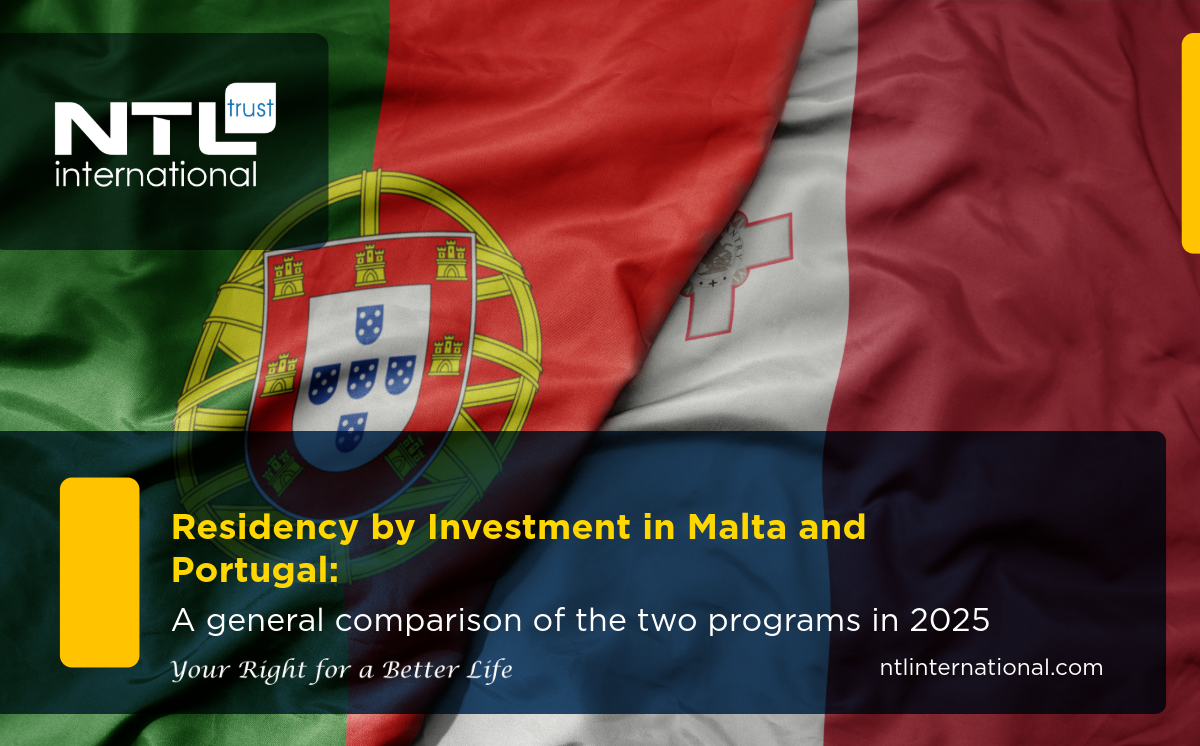
Both Malta and Portugal offer residency by investment programs. These programs aim to attract foreign investors by granting them residency rights in exchange for qualifying investments. With recent legislative developments, the requirements and benefits of each program differ, requiring careful consideration by potential investors.
Malta Permanent Residency Program (MPRP):
This program offers non-EU citizens the opportunity to obtain permanent residency through specific investments, which include:
- Real Estate Investment: Purchasing property worth at least €375,000 or renting property with an annual rent of at least €14,000.
- Government Contribution: A payment of €30,000 for purchasing property or €60,000 for renting property.
- Charitable Donation: A contribution of €2,000 to a registered local nonprofit organization.
- Financial Requirements: Proof of holding €500,000 in assets, including €150,000 in financial assets.
The Residency by investment program in Malta does not impose a minimum annual residency requirement but does require the investor to hold the qualifying property for at least five years.
Portugal Golden Visa Program:
The program has undergone significant changes, with real estate investment no longer qualifying as of October 7, 2023. The current investment options include:
- Investment through Investment Funds: A minimum investment of €500,000.
- Investment in Scientific Research or Cultural Heritage: A funding of €500,000 in scientific research or €250,000 in cultural heritage protection.
- Job Creation: Providing at least 10 jobs in Portugal.
- Commercial Investment: Securing at least 5 jobs with an investment starting at €500,000.
The Golden Visa (Residency by investment) offers residency and the right to work in Portugal, visa-free travel within the Schengen Area, and the possibility to obtain permanent residency or citizenship after five years, provided all legal requirements are met.
Comparing the Residency by investment programs in Malta and Portugal:
- Investment Flexibility: Malta’s program focuses on real estate and financial contributions, while Portugal offers a wider range of investment options, excluding real estate.
- Residency Renewal Requirements: The Malta Permanent Residency by investment Program (MPRP) does not require a minimum physical stay in the country. However, investors must maintain a residence address in Malta. In contrast, holders of the Portuguese Golden Visa must meet minimum residency requirements, starting at 7 days in the first year.
- Path to Citizenship: Both programs provide a path to citizenship, but Portugal offers a more stable route with eligibility to apply after just five years, while Malta requires seven years after obtaining permanent residency.
Why the Increasing Popularity of These Programs?
Investors seek strategies to enhance mobility and global stability, making residency and citizenship by investment programs an effective tool for achieving these goals.
In light of political and legislative changes, holding a second passport or alternative residency has become a smart step to protect assets and secure the future of families.
With the increasing modifications to global investment migration programs, investors are advised to act quickly to take advantage of the available opportunities before any new changes that may affect these pathways.

Nauru Is Now the Republic of Naoero: What It Means for the Citizenship Program
The Republic of Nauru has officially adopted the name Republic of Naoero. Citizenship Certificates now bear the new name; passports remain issued as Nauru during the transition.

EU Caribbean CBI Phase-Out by 2028: What the Visa Suspension Mechanism Means for Investors
The EU’s revised Visa Suspension Mechanism now treats CBI programme operation itself as suspension grounds. Antigua & Barbuda, Dominica, Grenada, St Kitts & Nevis, and Saint Lucia have reportedly been asked to phase out by 1 June 2028.

UAE Tourist Identity: Instant Digital Bank Account Launch
The Central Bank of the UAE, ICP, and ADCB have launched a digital identity-linked banking service allowing non-resident visitors to open an account and receive a debit card within minutes of arrival.

Best Residency by Investment Programs 2026
Compare 10 residency by investment programs in 2026: Greece, UAE, Portugal, Malta, Hungary, Germany, Latvia, Cyprus, USA EB-5, Türkiye. Analysis by NTL International.

EU Entry/Exit System and UK ETA: New 2026 Border Requirements for RBI Applicants
New EU and UK border systems mean RBI applicants traveling for property viewings, biometric appointments, or permit collection should plan for longer first-entry processing and confirm UK ETA status before departure.