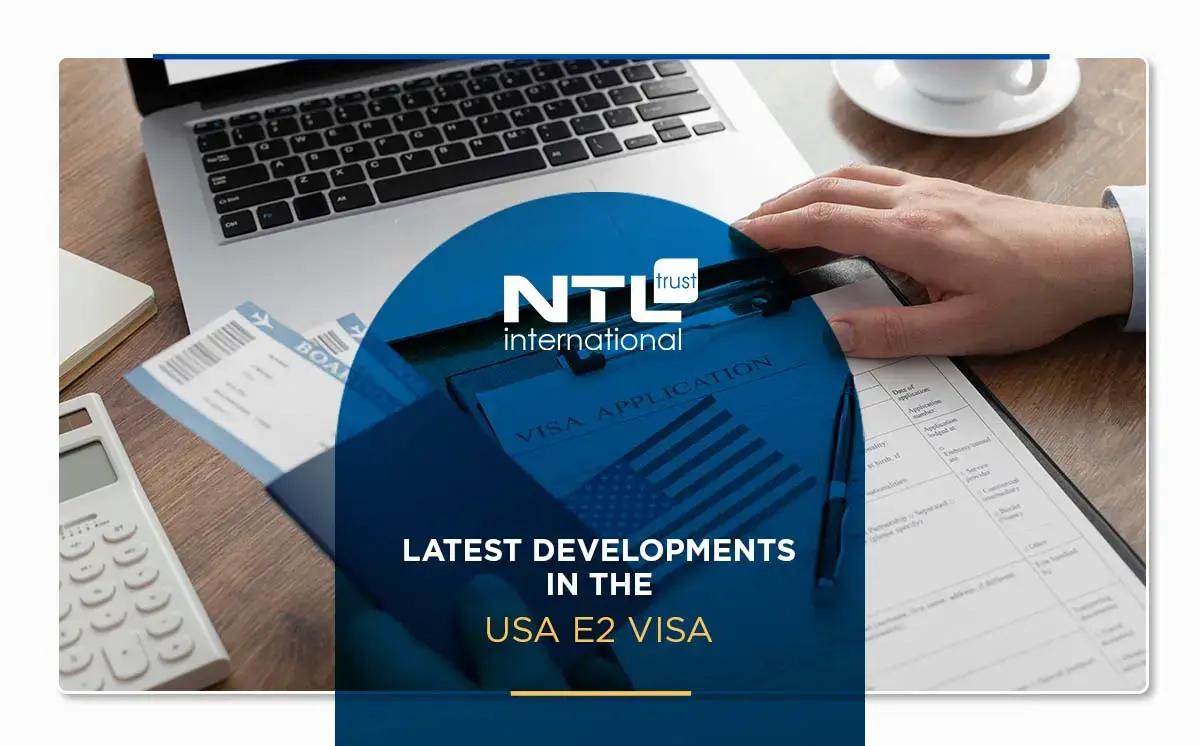
The USA E2 Visa is a non-immigrant visa that allows individuals from certain treaty countries to enter the United States for specific business-related purposes.
What is the concept of the USA E2 Visa?
The E2 visa, an abbreviation for the Economic and Trade Treaty, is a mutual agreement between the United States and select countries. Its primary objective is to foster trade partnerships and strengthen economic ties between these nations. E2 signifies “Economic and Trade,” encompassing various commitments and trade enhancements between the treaty-signing countries.
What is the USA E2 Visa (Treaty Investor Visa):
- Purpose: The E2 visa is intended for individuals or employees of companies that make a substantial investment in a U.S. business. The investment must be active and at risk.
- Eligibility: The USA E2 visa applicants must be nationals of a treaty country. However, the key difference is that the E2 visa requires a substantial and active investment in a U.S. enterprise, and the investment must be substantial in relation to the total cost of the business.
- Duration: E2 visas are initially granted for up to five years, but they can be renewed indefinitely as long as the investment and business operations continue to meet the requirements.
- Flexibility: The USA E2 Visa allows for more flexibility in terms of the type of business you can invest in, as long as it meets the investment criteria.
What is the E1 Visa (Treaty Trader Visa)?
- Purpose: The E1 visa is designed for individuals or employees of companies engaged in substantial trade between the United States and their home country. This trade can involve goods, services, and technology.
- Eligibility: To qualify for an E1 visa, you must be a national of a treaty country, and your business must meet specific criteria for substantial trade with the United States. This often means having a history of ongoing trade.
- Duration: E1 visas are typically issued for up to five years, with the possibility of extension.
- Renewal: E1 visas can be renewed as long as the trade between the United States and the treaty country continues to meet the requirements.
What are the recent developments in the USA E2 Visa?
The U.S. government has recently stipulated that individuals holding dual citizenship from countries with cooperation treaties must reside in their new country for a minimum of 3 years before applying for the USA E2 Visa. This new law opens up opportunities to work, live, and invest in the United States for a maximum period of 5 years.
What nationalities can get the USA E2 Visa:
Some nationalities obtain an USA E2 visa that lasts between 3 or 5 years, and they are:
- Albania – 3 years – multiple entry.
- Australia – 4 years – multiple entry.
- Armenia – 5 years – multiple entry.
- Canada – 5 years – multiple entry.
- Grenada – 5 years – multiple entry.
- Ireland – 5 years – multiple entry.
- Italy – 5 years – multiple entry.
- Latvia – 5 years – multiple entry.
- Panama – 5 years – multiple entry.
- Paraguay – 5 years – multiple entry.
- South Korea – 5 years multiple entry.
- Spain – 5 years – multiple entry.
- Türkiye – 5 years – multiple entry.
- Britain – 5 years – multiple entry.
Some nationalities are granted a visa for a period of one year or less, and they are:
- Egypt – 3 months – single entry.
- Jordan – 3 months – single entry.
- Georgia – 1 year – multiple entry.
- Montenegro – 1 year multiple entry.
The USA E2 Visa is designated for individuals who make significant investments in American companies. It requires citizenship from treaty countries and aims to enhance economic and trade relations between the United States and the treaty country. Eligibility criteria and specific application processes may vary, so it’s essential to consult with a specialized immigration lawyer in the United States, such as NTL Law, to obtain the latest information and guidance.

US Visa Bond Program Becomes Permanent: Impact on Antigua and Barbuda, Dominica, Grenada, and Vanuatu Citizenship by Investment
The US Department of State has made its B-1/B-2 visa bond program permanent, effective 3 August 2026, raising bond amounts to $10,000-$20,000. Citizenship by Investment without a residency requirement remains an explicit qualifying criterion, directly affecting Antigua and Barbuda, Dominica, Grenada, and Vanuatu.

Nauru Is Now the Republic of Naoero: What It Means for the Citizenship Program
The Republic of Nauru has officially adopted the name Republic of Naoero. Citizenship Certificates now bear the new name; passports remain issued as Nauru during the transition.

EU Caribbean CBI Phase-Out by 2028: What the Visa Suspension Mechanism Means for Investors
The EU’s revised Visa Suspension Mechanism now treats CBI programme operation itself as suspension grounds. Antigua & Barbuda, Dominica, Grenada, St Kitts & Nevis, and Saint Lucia have reportedly been asked to phase out by 1 June 2028.

UAE Tourist Identity: Instant Digital Bank Account Launch
The Central Bank of the UAE, ICP, and ADCB have launched a digital identity-linked banking service allowing non-resident visitors to open an account and receive a debit card within minutes of arrival.

Best Residency by Investment Programs 2026
Compare 10 residency by investment programs in 2026: Greece, UAE, Portugal, Malta, Hungary, Germany, Latvia, Cyprus, USA EB-5, Türkiye. Analysis by NTL International.