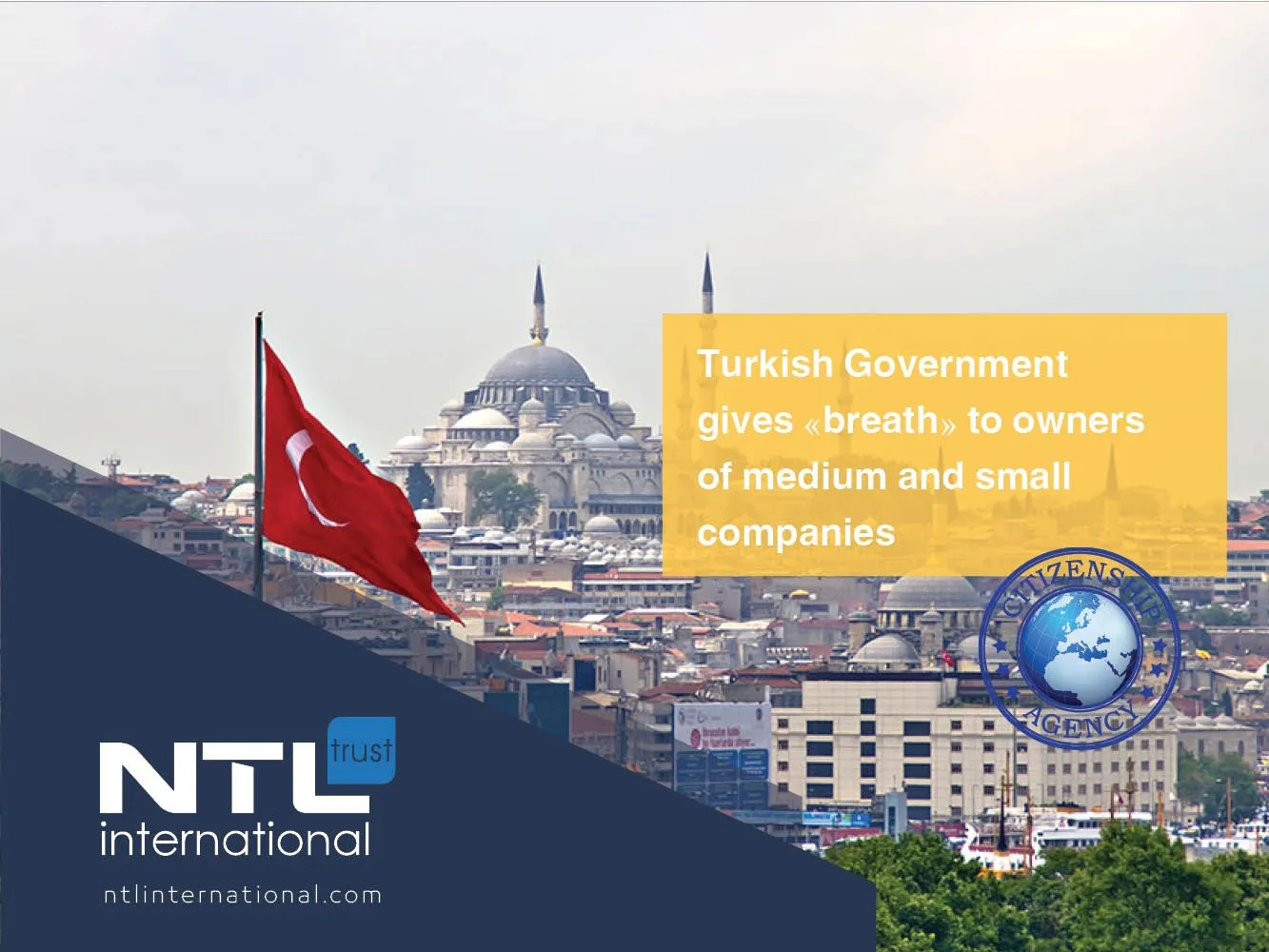
In dealing with the Covid-19 outbreak, the Turkish government continues to support its people to overcome this period. Accordingly, President Recep Tayyip Erdogan announced new economic support ” NEFES KREDİSİ: Breath credit” to assist various sectors.
At the beginning of this month, applications began for the “breath credit” project. Which was carried out in cooperation with the Union of Chambers and Commodity Exchanges of Türkiye (TOBB), Credit Guarantee Fund (KGF), Ziraat Bank and Deniz Bank.
The “Breath Credit” project is based on the following idea:
The Union of Chambers and Commodity Exchanges (TOBB) deposits the equivalent of 500 million Turkish liras in Ziraat and Deniz Bank. Which will allow using loans worth 5 billion Turkish liras (10 times this amount). Then the role of the Credit Guarantee Fund comes. It will guarantee the small and medium business owners who cannot use loans due to the lack of their guarantees.
Who can benefit from The “Breath Credit”? How much is it? What is the payment plan?
The Turkish SMEs, which are the most affected by the epidemic, will be able to use of 50k, 100k or 150k TL. Depending on the provinces In which it operates and also according to its turnover volume during 2020.
The loan facility will have a 6-month grace period. Moreover, the creditor can repay in 12 instalments-night with low interest (9.90% per year).
They expected that 70.000 SMEs will use the “breath credit” within two months.
It is worth noting that Türkiye has begun to return to its normal life. With the beginning of this month, July, all-night and weekend curfews, which have been in force for months, have been completely cancelledallow use. There will be no restrictions on travel between Turkish cities. Cafes and restaurants are now allowed to receive customers without restrictions.
This came after the Turkish government announced that it had exceeded the 51 million doses of Coronavirus vaccination for its people and residents. As a part of a plan to implement a rapid vaccination schedule. That exceeded the threshold of 1.5 million doses of the Corona vaccine per day.

Life in Spain: the gateway to stability and well-being for investors
Areas of life in Spain, a closer look at the requirements of daily life

Greek Golden Visa: New Investment Tiers
Greek Golden Visa: New Investment Thresholds Announced

CBI programs bring together 4 Caribbean islands to sign a MOA
4 of 5 Caribbean CBI programs sign a cooperation agreement.

The European Union (EU): Your Gateway to Limitless Opportunities
The European Union (EU) offers a wealth of opportunities for investors and individuals seeking a better life.
Important Update for Grenada Citizenship by Investment (CBI) Program!
Important Update for Grenada Citizenship by Investment (CBI) Program! on March 25 , 2024.