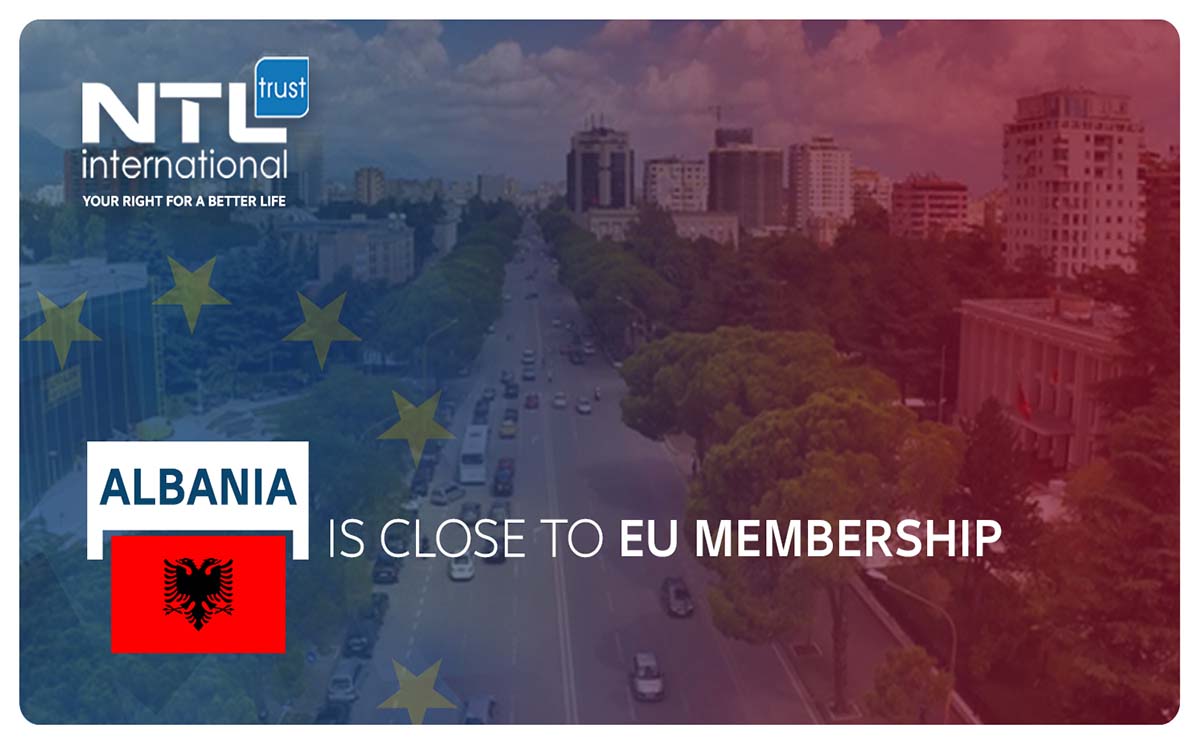
Membership negotiations between the European Union and both Albania and the Balkan countries officially began after many years of the first official request submitted by Albania in 2009, as it had to work to meet specific conditional criteria for membership which include judicial reform, public administration, rules of Parliamentary procedural, anti-corruption, organized crime, an effective market economy, human rights and freedom of expression.
In June 2014, Albania had candidate status by the European Union. In April 2018, the committee issued an unconditional recommendation to open accession negotiations in 2019. On 25-03-2020 the Council decided to open accession negotiations.
The European Commission said that Albania and Northern Macedonia have made sufficient progress, allowing them to be positioned as the official “candidate” in European Union membership bids.
Albania has, over the past years, been extensively involved in the institutions of the European Union, joining NATO as a full member in 2009. Member of the Organization for Security and Cooperation in Europe and the Council of Europe and one of the founding members of the Union for the Mediterranean, also a member of the World Trade Organization and the Organization of the Islamic Conference.
It is worth noting that there are five recognized EU membership candidates in the future: Turkey (submitted on April 14, 1987), Northern Macedonia (submitted on March 22, 2004), Montenegro (submitted in 2008), Albania (Submitted in 2009) and Serbia (Submitted in 2009). Serbia and Montenegro, the two most advanced candidates, are expected to join not later than 2025 and Albania no later than 2027.
It is worth noting that Albania is distinguished as it is a raw country rich in many resources and open to all investments, it is a beautiful country with its inhabitants, customs and charming nature, also it is an industrial country with a middle income and with an economy ranks 27 among 44 countries in the European region. It moved to a more open and flexible economic system, which led to income growth and poverty reduction.
Albania is rich in many mines and fields of coal, chrome, nickel and copper, in addition to the construction sector, especially housing, in addition to minerals, energy, tourism, textile, agriculture and even fishing, which are all strong opportunities that encourage investment, especially with the availability of Albania program for Residency by Investment, which attracts investors from all over the world due to its simple conditions and reasonable costs.

UAE Tourist Identity: Instant Digital Bank Account Launch
The Central Bank of the UAE, ICP, and ADCB have launched a digital identity-linked banking service allowing non-resident visitors to open an account and receive a debit card within minutes of arrival.

Best Residency by Investment Programs 2026
Compare 10 residency by investment programs in 2026: Greece, UAE, Portugal, Malta, Hungary, Germany, Latvia, Cyprus, USA EB-5, Türkiye. Analysis by NTL International.

EU Entry/Exit System and UK ETA: New 2026 Border Requirements for RBI Applicants
New EU and UK border systems mean RBI applicants traveling for property viewings, biometric appointments, or permit collection should plan for longer first-entry processing and confirm UK ETA status before departure.
UAE Golden Visa Return Document: How It Works in 2026
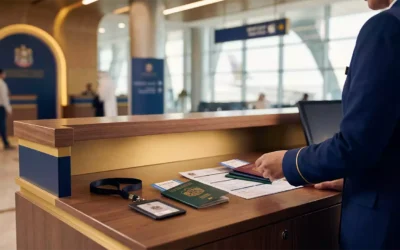
The UAE Golden Visa Return Document is now issued within 30 minutes, the UAE Ministry of Foreign Affairs (MOFA) has confirmed, as part of an expanded package of consular services for Golden Visa holders traveling outside the country.