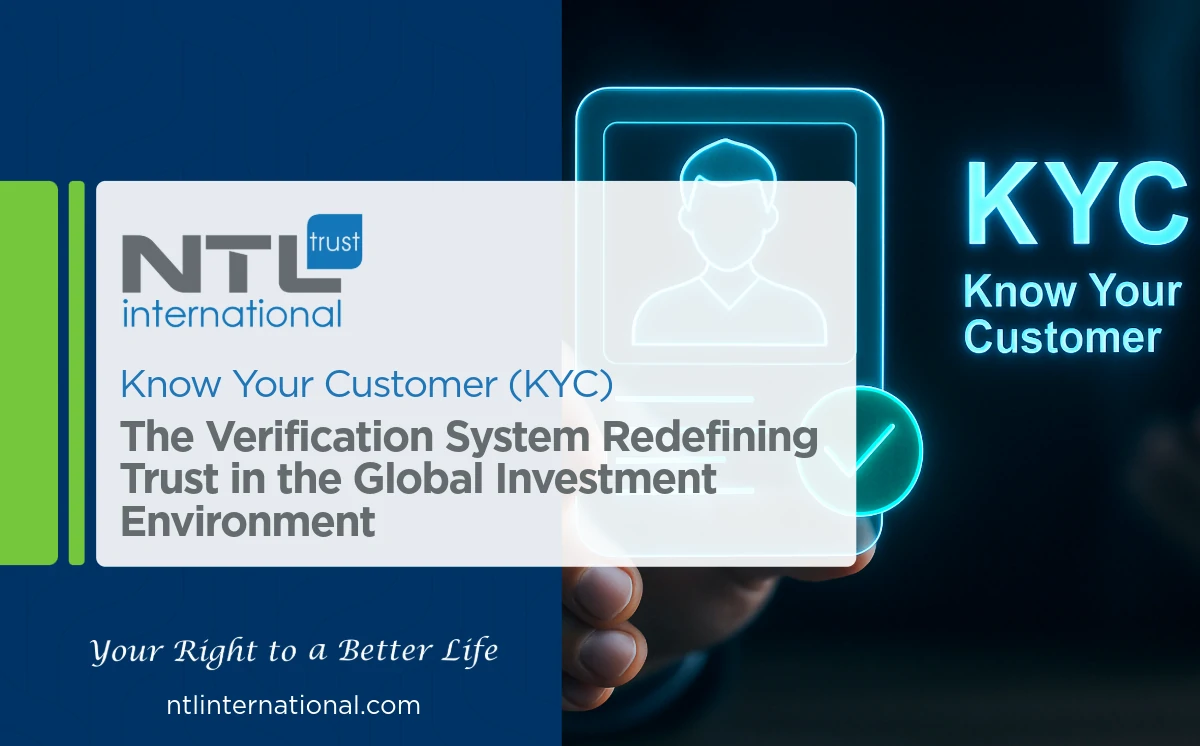
In the last two decades, Know Your Customer (KYC) has moved from being a technical compliance term to a central pillar of trust in the global investment environment. For banks, investment firms, and citizenship by investment (CBI) units, KYC is no longer a box-ticking exercise. It is a structured process that protects financial systems from abuse and gives serious investors a clear, credible profile in the eyes of regulators and international counterparties.
What Is the Know Your Customer KYC System?
KYC, or Know Your Customer, is a regulatory and compliance framework that requires financial institutions and certain regulated non financial businesses and professions to verify the identity of their clients before and during the provision of services. The objective is straightforward yet critical:
-
Confirm who the customer is
-
Understand the nature of the business relationship
-
Reduce the risk that financial or investment channels are used for money laundering, terrorism financing, fraud, or other illicit activities
In practical terms, KYC is the front gate of the wider anti money laundering (AML) system. It translates high level legal obligations into concrete steps applied to every customer, especially in cross border and high value transactions.
Regulatory Framework and International Standards
The modern KYC framework has deep regulatory roots. In the United States, the Bank Secrecy Act (BSA) of 1970 introduced key record keeping and reporting obligations for financial institutions. These obligations were significantly strengthened by the USA PATRIOT Act, which required formal Customer Identification Programs (CIP) and set clear rules for identifying and verifying customers.
At the international level, the Financial Action Task Force (FATF) did not use the word “KYC” as a legal term, but its Recommendations require countries to implement:
-
Customer due diligence
-
Identification and verification of customers and beneficial owners
-
Understanding the purpose and intended nature of the business relationship
-
Ongoing monitoring of transactions
In practice, these requirements form what most regulators and financial institutions refer to as KYC.
Where Is KYC Applied Today?
KYC measures are now embedded in the regulatory frameworks of most jurisdictions with organized financial systems. These include, among others:
-
United States and Canada
-
United Kingdom and European Union member states
-
Major financial centers such as Singapore and Hong Kong
-
Gulf and Middle East hubs such as the United Arab Emirates
-
Developed Asia-Pacific markets including Australia and New Zealand
KYC obligations generally apply to:
-
Banks and other deposit taking institutions
-
Investment firms and asset managers
-
Insurance and brokerage companies
-
Certain non financial businesses and professions such as real estate brokers, law firms in specified activities, auditors, and dealers in precious metals and stones
In parallel, countries that operate citizenship by investment and residency by investment programs apply KYC and broader due diligence measures to preserve the integrity of their programs and ensure the legitimacy of applicants and their funds.
How Is KYC Implemented in Practice?
While specific requirements vary by jurisdiction, a robust KYC process usually includes several core components:
- Collecting basic personal data
-
Full name, nationality, date and place of birth
-
Occupation or business activity
-
Contact details
-
- Verifying identity using reliable documents
-
Passport or national ID
-
In some cases, additional government issued documents or certified copies
-
- Verifying address and contact information
-
Utility bill, bank statement, or residency certificate
-
Sometimes supported by digital verification tools
-
- Identifying and verifying the beneficial owner
-
Especially for companies, trusts, and complex ownership structures
-
Determining who ultimately owns or controls the assets or accounts
-
- Understanding the purpose and nature of the relationship
-
Investment objectives
-
Expected transaction size and frequency
-
Source of funds and, where relevant, source of wealth
-
- Ongoing monitoring and risk based review
-
-
Monitoring transactions to ensure they are consistent with the customer profile
-
Applying enhanced due diligence to high risk clients, sectors, or jurisdictions
-
Paying special attention to politically exposed persons (PEPs) and sanctioned parties
-
Today, many institutions use digital KYC and e onboarding tools that combine document verification, biometric checks, and database screening. These technologies allow institutions to complete KYC faster and with higher accuracy, while still meeting local and international regulatory expectations.
Why Is KYC Essential in the Investment World?
For global investors, KYC is not only a regulatory burden. When handled correctly, it is a strategic asset that delivers several key benefits.
Protection against financial crime
Platforms that apply rigorous KYC are less likely to be exposed to money laundering, fraud, and illicit flows. This protects both the institution and its legitimate clients.
Enhanced trust and reputation
Investors increasingly prefer counterparties that follow clear AML and KYC standards. Strong procedures signal that the institution is serious, disciplined, and aligned with international best practices.
Smoother banking and regulatory relationships
Firms with consistent KYC programs usually find it easier to obtain licenses, maintain correspondent banking relationships, and cooperate with cross border partners. For the investor, this translates into more stable access to global financial services.
A transparent and credible financial record
A well documented KYC and due diligence history helps investors present a clear profile whenever they expand into new markets, apply for new accounts, or structure cross border investments.
Why Is KYC Crucial for Investors in Citizenship by Investment Programs?
For investors pursuing a second citizenship or long term residency by investment, KYC is not a formality. It is a core component of their long term financial identity in the new jurisdiction.
A complete, transparent, and well structured financial file can:
-
Increase the likelihood of a smooth approval process
-
Reduce delays caused by repeated questions about source of funds
-
Support future applications for banking services, company registration, and real estate purchases in the host country
On the other hand, an investor’s application in a citizenship by investment program may be refused, delayed, or subjected to enhanced scrutiny if the applicant cannot convincingly demonstrate:
-
The lawful source of the invested funds
-
The legitimacy of the underlying business activity
-
A clean legal and sanctions history
These assessments are carried out under AML and due diligence standards that are usually aligned with FATF Recommendations and the host country’s own legislation. As a result, serious investors should view KYC as a strategic investment in their reputation, not as an obstacle.
KYC has evolved into a cornerstone of institutional credibility in the global financial system. For banks, investment firms, and citizenship by investment units, it provides a structured way to understand who their clients are and how their money is generated.
For investors and entrepreneurs, especially those seeking a second citizenship or residency through investment, compliance with KYC and related due diligence requirements is no longer optional. It is a vital condition for protecting their capital, securing long term access to banking and investment channels, and expanding confidently on a global scale.
Top Citizenship by investment Programs in 2026
Top Citizenship by Investment Programs in 2026 | NTL International src="https://ntlinternational.com/wp-content/uploads/2026/02/ntl_top10_cbi__map.webp" alt="World map showing the top citizenship by investment programs ranked by application volume 2026, NTL...
Netherlands Box 3 Reform: Structural Shifts and the 36% Tax

Spanish Tax Residency Solution

Nauru Citizenship 2026: Major Regulatory Updates