Slovenia Residency by Investment 2026: The Business Pathway to EU Citizenship
Contents
Key Takeaways
- Slovenia does not offer a direct citizenship by investment programme; residency is obtained through establishing a d.o.o. company with a minimum EUR 50,000 investment in fixed assets.
- Permanent residence becomes available after 5 years of continuous legal residence; citizenship through naturalisation after 10 years total, subject to language and integration requirements.
- A separate citizenship by descent pathway exists for individuals with Slovenian parents or, in limited cases, grandparents, but this does not apply to the general investor population.
- The Slovenian passport ranks among the top 10 globally, providing visa-free or visa-on-arrival access to over 180 destinations as an EU and Schengen member state.
- Slovenia restricts dual citizenship; naturalising applicants may be required to renounce their existing nationality, though exceptions apply for EU/EEA nationals.
Slovenia offers no direct citizenship by investment programme. Foreign investors can obtain residency by registering a d.o.o. company with EUR 50,000 minimum investment. Temporary residence leads to permanent residence after 5 years and citizenship eligibility after 10 years. A separate citizenship by descent route exists exclusively for individuals with verified Slovenian parentage or grandparentage. NTL provides advisory on alternative EU and global investment migration programmes.
"Slovenia's residency pathway through business formation is a legitimate route to EU citizenship, but it requires genuine economic commitment and a 10-year timeline. For investors seeking more immediate mobility solutions, we typically recommend evaluating this alongside direct citizenship programmes that deliver passport results within months rather than years."
Recently, numerous claims have circulated in the investment migration market promoting the idea of "citizenship by investment in Slovenia," suggesting that direct investment programmes exist for obtaining Slovenian nationality. These claims are misleading. Slovenia does not operate a citizenship by investment programme, and no legitimate pathway exists to acquire Slovenian citizenship through a single financial contribution.
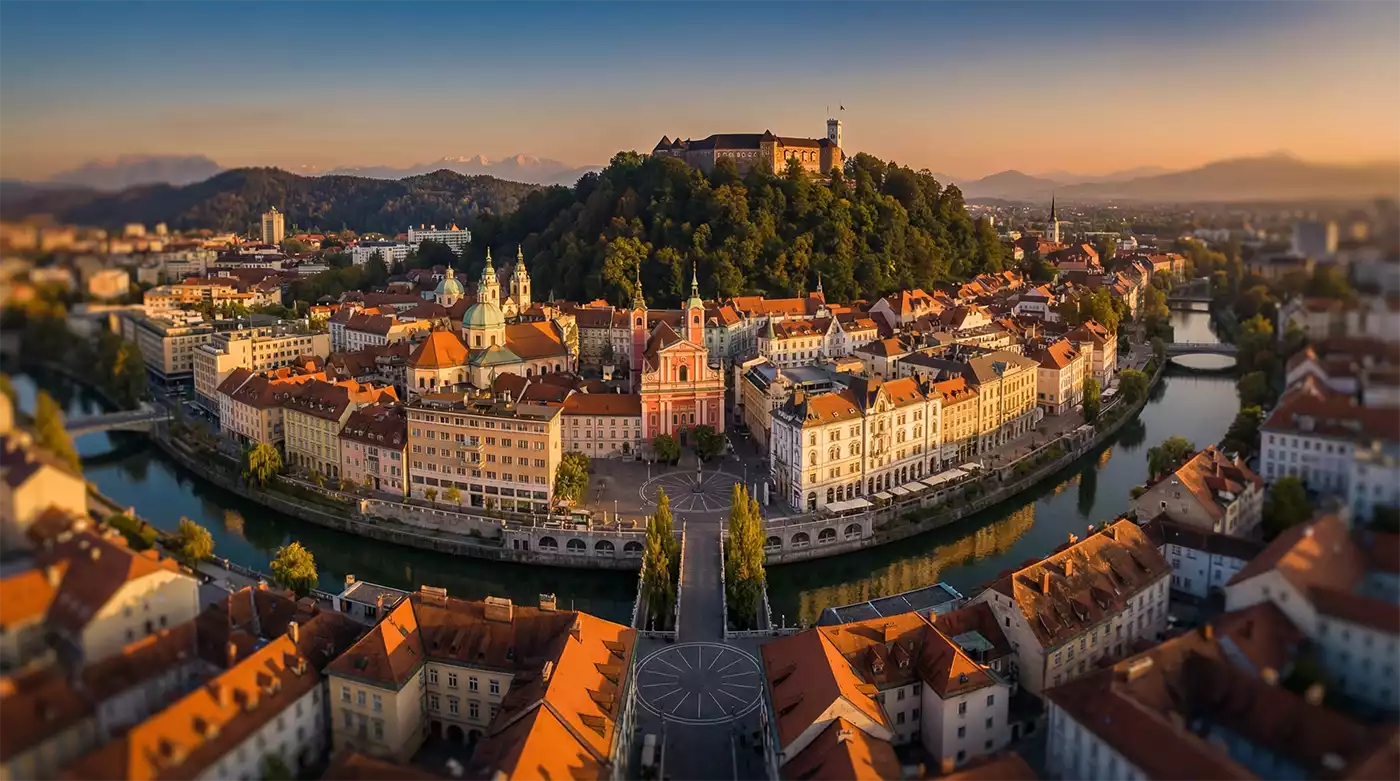
Slovenia is a European Union and Schengen member state situated at the crossroads of Central Europe, bordered by Austria, Italy, Hungary, and Croatia. It offers a blend of Mediterranean warmth, Alpine purity, and a stable economic environment. More than a scenic destination, Slovenia is a strategic investment hub and a gateway to the European Union. However, investors must clearly distinguish between what Slovenia actually offers and the exaggerated claims made by unregulated intermediaries.
What Slovenia does offer is a structured business residency pathway: foreign investors can establish a company, obtain a renewable residence permit, and, after 10 years of continuous physical residence combined with language and integration requirements, apply for citizenship through naturalisation. Additionally, a separate and limited citizenship by descent route exists for individuals who can document Slovenian parentage or, in restricted cases, grandparentage. This guide examines both routes factually, clarifying the regulatory reality versus the marketing noise.
Slovenia at a Glance
| Attribute | Detail |
|---|---|
| Location | Central Europe; bordered by Austria, Italy, Hungary, and Croatia |
| Capital | Ljubljana |
| Population | Approximately 2.1 million |
| Official Language | Slovenian |
| Currency | Euro (EUR) |
| EU Membership | Since 2004 |
| Schengen Membership | Since 2007 |
| Passport Strength | Top 10 globally; 180+ visa-free destinations |
| Corporate Tax Rate | 19% |
| Direct CBI Programme | None |
Residency by Investment: The Business Pathway
The primary route for foreign investors to establish legal residence in Slovenia is through active business formation. This involves registering a Slovenian limited liability company, known as a d.o.o. (družba z omejeno odgovornostjo), and meeting specific investment and employment criteria.
Unlike passive investment models such as real estate purchases or government bond subscriptions found in other European jurisdictions, Slovenia requires that the investor actively manages and operates the business. The purchase of real estate alone does not qualify for a residence permit.
How the Business Residency Route Works
The process begins with company registration. The investor establishes a d.o.o. with a minimum share capital of EUR 7,500, deposited into a temporary bank account. Once the company is registered, the investor applies for a single residence and work permit through the Employment Service of Slovenia. This combined permit allows the holder to both reside in and operate their business within the country.
Within the first six months of operations, the investor must demonstrate a minimum investment of EUR 50,000 in fixed assets. These assets can include equipment, vehicles, office furnishings, or real estate acquired through the company. Additionally, the company must employ at least one EU or Slovenian national during this initial period and demonstrate a monthly income of at least EUR 10,000 in its first six months.
The initial residence permit is typically granted for one to two years and is renewable. With the 2025 reforms, initial permit durations of up to two years have become more common, with extensions of up to three years available.
Requirements and Costs
| Requirement | Detail |
|---|---|
| Company Type | d.o.o. (limited liability company) |
| Minimum Share Capital | EUR 7,500 |
| Minimum Fixed Asset Investment | EUR 50,000 within 6 months |
| Employment Obligation | At least 1 EU/Slovenian employee for 6 months |
| Income Requirement | EUR 10,000/month for first 6 months |
| Ownership Requirement | Minimum 51% shareholding |
| Residence Permit Fee | EUR 70 to EUR 130 |
| Family Inclusion | Spouse and dependent children eligible for dependent permits |
Legal/admin fees not included. Docs need translation and Apostille.
Investors should budget for additional costs including legal counsel for company formation, accounting services, notarised translations of all documentation into Slovenian, and ongoing tax compliance. The company must file regular tax declarations and demonstrate genuine commercial activity; a paper company without real operations will not satisfy the authorities, particularly under the stricter scrutiny introduced by the 2025 reforms.
Timeline: From Temporary Residence to EU Citizenship
The pathway from initial business formation to Slovenian citizenship follows a structured, multi-stage timeline governed by the Citizenship Act of the Republic of Slovenia (Zakon o državljanstvu Republike Slovenije, ZDRS).
| Stage | Timeframe | Key Conditions |
|---|---|---|
| Company Registration | 2 to 4 weeks | d.o.o. formation, bank account, business plan |
| Temporary Residence Permit | Years 1 to 5 | Annual or biennial renewals; active business operations |
| Permanent Residence | After 5 years | Continuous legal residence; financial self-sufficiency |
| Citizenship Eligibility | After 10 years total | Slovenian language proficiency; social integration; clean criminal record |
The 10-year residency requirement is among the longest in Europe for naturalisation through investment. Applicants must demonstrate actual physical presence in Slovenia, not merely holding a permit. Authorities increasingly verify whether permit holders genuinely reside in the country through documentation such as housing contracts, utility bills, and local tax filings.
Citizenship by Descent: The Ancestry Route
Separately from the business residency pathway, Slovenia offers citizenship by descent for individuals who can demonstrate documented Slovenian ancestry. This route is governed by the jus sanguinis (right of blood) principle, but with significantly stricter limitations than comparable programmes in countries such as Italy, Ireland, or Croatia.
Who Qualifies
Eligibility depends on the generation of descent and whether the citizenship chain was actively maintained through each generation.
Children of Slovenian Citizens
This is the most straightforward pathway. A child born to at least one Slovenian parent acquires citizenship automatically if born in Slovenia. Those born abroad to one Slovenian parent can acquire citizenship by parental application before the child turns 18, or by personal declaration before age 36.
Grandchildren of Slovenian Citizens
This pathway is discretionary, not automatic. Grandchildren may apply under Article 12 of the Citizenship Act, but must demonstrate active ties to Slovenia. Factors considered by the Ministry of the Interior include Slovenian language proficiency, participation in Slovenian cultural organisations, documented visits to the country, and evidence of ongoing connection to the Slovenian community. There is no guarantee of approval.
Great-Grandchildren and Beyond
Slovenia generally does not extend citizenship by descent beyond the grandchild generation. The only exception arises if each intermediate generation maintained and registered their Slovenian citizenship; in that case, the applicant would qualify as a child of a Slovenian citizen. If the chain was broken at any point, direct application is not possible.
Repatriation: A Related but Distinct Pathway
Descendants of Slovenian emigrants (up to the fourth generation) may qualify for naturalisation under the repatriation provisions of the Citizenship Act. However, this is not citizenship by descent from abroad; the applicant must first establish residence in Slovenia and live there continuously for at least one year before applying. The standard 10-year residency requirement is reduced to 1 year for qualifying repatriation applicants.
Important Limitations
Slovenia's citizenship by descent pathway is not comparable to the open-ended generational programmes found in Italy or Ireland. It applies exclusively to individuals with verifiable Slovenian parentage or, in limited cases, grandparentage. The vast majority of international investors will not qualify for this route. Those who believe they may have Slovenian ancestry should begin by gathering official vital records, including passports, birth certificates, and marriage certificates of the relevant Slovenian ancestor.
Benefits of Slovenian Citizenship
For those who successfully complete either the naturalisation or descent pathway, the Slovenian passport delivers substantial global mobility and EU access.
| Benefit | Detail |
|---|---|
| Visa-Free Travel | 180+ destinations including the United States, United Kingdom, Canada, Japan, and Australia |
| EU Citizenship | Full rights to live, work, and study in all 27 EU member states |
| Schengen Access | Free movement within the Schengen Area without border controls |
| Healthcare and Education | Access to Slovenian and EU public healthcare and education systems |
| Business Environment | Gateway to the EU single market; 19% corporate tax rate |
| Global Passport Ranking | Top 10 globally (Henley Passport Index 2026) |
Dual Citizenship Considerations
Slovenia restricts dual citizenship more than most EU member states. Individuals naturalising through the standard 10-year residency pathway may be required to renounce their previous nationality. Exceptions exist for EU/EEA nationals and certain other categories, and each case is assessed individually by the Ministry of the Interior. Prospective applicants should seek qualified legal advice on whether their specific situation allows retention of existing citizenship.
Slovenia vs. Direct CBI Programmes
For investors evaluating European and global mobility options, the Slovenian pathway should be assessed alongside programmes that deliver more immediate results.
| Factor | Slovenia (Business Residency) | CBI Programmes |
|---|---|---|
| Programme Type | Business residency to naturalisation | Direct citizenship by investment |
| Minimum Investment | EUR 50,000 + operating costs | From USD 100,000 |
| Time to Citizenship | Approximately 10 years | 3 to 6 months |
| Physical Presence | Required throughout | Minimal or none |
| EU Access | Full EU citizenship | No EU access; visa-free to 140+ countries |
| Dual Citizenship | Restricted | Generally permitted |
| Business Requirement | Active company management | None |
Investors with immediate mobility needs or those unable to commit to a decade of physical residence in Slovenia may find greater value in established CBI programmes. NTL advises clients on constructing diversified CBI-RBI portfolios that combine immediate passport access with longer-term European residency objectives.
Frequently Asked Questions
Does Slovenia offer a direct citizenship by investment programme?
No. Slovenia does not have a direct citizenship by investment programme. Foreign investors can obtain residency through business formation (d.o.o. company with EUR 50,000 minimum investment) and, after 10 years of continuous residence and meeting integration requirements, may apply for citizenship through naturalisation.
What is the minimum investment required for Slovenia residency?
The minimum investment is EUR 50,000 in fixed assets within the first six months of establishing a Slovenian limited liability company (d.o.o.). The minimum share capital for company registration is EUR 7,500.
Can I obtain Slovenian citizenship through ancestry?
Yes, but eligibility is limited. Children of Slovenian citizens can acquire citizenship automatically or by application before age 36. Grandchildren may apply under discretionary provisions by demonstrating active ties to Slovenia. Great-grandchildren are generally not eligible unless the citizenship chain was maintained through each generation.
How long does it take to obtain Slovenian citizenship through investment residency?
The total timeline is approximately 10 years: temporary residence (renewable annually or biennially), permanent residence eligibility after 5 years of continuous legal residence, and citizenship eligibility after a further 5 years, subject to Slovenian language proficiency and integration requirements.
Does Slovenia allow dual citizenship?
Slovenia restricts dual citizenship more than most EU countries. Those naturalising may be required to renounce their previous nationality, though exceptions exist for EU/EEA nationals and certain other categories. Each case is assessed individually by the Ministry of the Interior.
Related Programmes and Insights
Conclusion
Slovenia offers a legitimate, structured pathway from business residency to EU citizenship, but it requires genuine economic engagement, physical presence, and a commitment spanning approximately 10 years. The citizenship by descent route provides a faster alternative for the narrow population of individuals who can document Slovenian parentage or grandparentage, though eligibility is significantly more restrictive than comparable ancestry programmes in other EU member states.
For investors evaluating European mobility options, understanding the full landscape of available CBI and RBI programmes is essential. NTL provides comprehensive advisory across Caribbean, European, and Middle Eastern jurisdictions, helping clients identify the pathway that aligns with their timeline, budget, and mobility objectives.
Request Your Eligibility Assessment
Handled exclusively by our senior advisory team. All communications are confidential.
About NTL International
NTL provides professional guidance and compliance support for global CBI and RBI programs. As a government-authorized agent in select jurisdictions and collaborator with specialized legal experts worldwide, NTL manages the entire application process, ensuring every application meets statutory requirements from initial assessment through final approval, working with local counsel for full compliance.
Our Services Include:
- Eligibility assessment and investment option analysis
- Complete application preparation and submission
- Due diligence coordination and documentation support
- Investment facilitation and government fee processing
- Post-approval support, compliance guidance and passport renewal
- Diversified CBI-RBI mobility portfolio advisory