Gulf Cooperation Council (GCC) 2026: Investment, Residency, and the Grand Tours Visa
Key Takeaways
- The GCC Grand Tours Visa entered a pilot phase in February 2026, with full public rollout expected later in the year, enabling multi-country travel across all six Gulf states under a single authorization.
- The World Bank projects GCC GDP growth of 4.5% in 2026, with non-oil sectors now contributing over 73% of total GDP, reflecting deep structural diversification.
- The GCC population reached approximately 61.5 million by the end of 2024, an increase of 8.5 million compared to 2019, driven by economic expansion and labour demand.
- The UAE Golden Visa, Saudi Premium Residency, and other GCC investment pathways offer long-term residency options for high-net-worth investors and professionals.
- NTL operates in compliance with all applicable laws through its specialized legal team, supporting investors in navigating residency programs across the Gulf region.
The Gulf Cooperation Council (GCC) comprises six Arab Gulf states with a combined population exceeding 61 million and projected GDP growth of 4.5% in 2026. The GCC Grand Tours Visa pilot launched in February 2026 for multi-country travel. GCC member states offer investment residency pathways including the UAE Golden Visa. NTL provides guidance on GCC residency programs through its specialized legal team.
"The Gulf region is undergoing a structural transformation that extends well beyond oil revenues. For investors seeking long-term residency and business access across the GCC, the combination of economic diversification, regulatory modernization, and the forthcoming unified visa framework creates a compelling mobility proposition that few other regions can match."
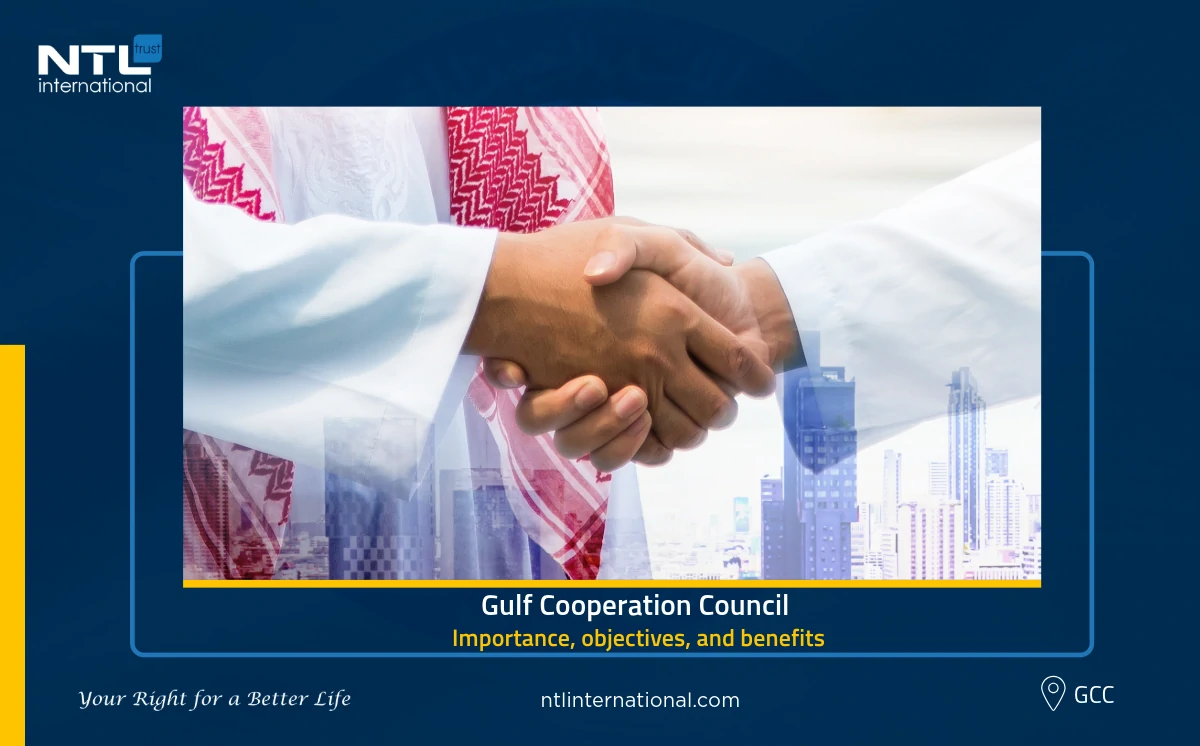
The Gulf Cooperation Council has entered a defining phase of economic and regulatory transformation. What began as a security-focused alliance in 1981 has evolved into one of the world's most dynamic economic blocs, with ambitious diversification programs, rising foreign direct investment, and a unified visa initiative that could reshape regional mobility for millions of travellers and investors.
For high-net-worth individuals and families evaluating global mobility options, the GCC presents a convergence of factors: robust economic growth, investor-friendly residency pathways, strategic geographic positioning between Europe and Asia, and an increasingly integrated regulatory environment. This analysis examines the current state of the GCC in 2026, the progress of the Grand Tours Visa, and the investment and residency opportunities available across member states.
What Is the Gulf Cooperation Council?
The Gulf Cooperation Council, formally the Cooperation Council for the Arab States of the Gulf, is a regional intergovernmental organization established on May 25, 1981. It was created to promote coordination, integration, and cooperation among its six member states across economic, political, security, and cultural domains.
The founding charter was driven by shared geographic, cultural, and economic characteristics among the Arabian Gulf states, as well as a collective interest in regional stability. Over the four decades since its establishment, the GCC has expanded its scope from primarily security cooperation to encompass trade liberalization, customs harmonization, currency coordination, joint infrastructure projects, and, most recently, unified travel facilitation.
The GCC Secretariat General is headquartered in Riyadh, Saudi Arabia. The Supreme Council, composed of the heads of state of the six member nations, convenes annually and serves as the highest decision-making authority within the organization.
GCC Member States at a Glance
The six member states of the GCC span the Arabian Peninsula and collectively represent one of the most resource-rich and economically significant regions in the world.
| Member State | Capital | Population (End 2024) | Key Economic Driver |
|---|---|---|---|
| Kingdom of Saudi Arabia | Riyadh | ~35.3 million | Vision 2030 diversification, oil, tourism |
| United Arab Emirates | Abu Dhabi | ~11 million | Financial services, real estate, logistics, tourism |
| State of Kuwait | Kuwait City | ~4.8 million | Oil, financial services |
| State of Qatar | Doha | ~3 million | LNG, financial services, sports infrastructure |
| Sultanate of Oman | Muscat | ~5.5 million | Vision 2040, logistics, mining, tourism |
| Kingdom of Bahrain | Manama | ~1.6 million | Financial hub, fintech, aluminium, tourism |
According to the GCC Statistical Center (GCC-Stat), the total population of the region reached approximately 61.5 million by the end of 2024, reflecting an increase of 8.5 million compared to 2019 and an average annual growth rate of 2.8%, nearly three times the global average. The working-age population (15 to 64 years) constitutes 76.7% of the total, indicating a substantial and productive labour force.
GCC Economic Outlook 2026
International financial institutions broadly agree that 2026 will be a consolidation year for GCC economies, with growth strengthening on the back of non-oil expansion, OPEC+ production normalization, and sustained domestic demand.
Growth Projections
The World Bank projects GCC economic growth of 3.2% in 2025, accelerating to 4.5% in 2026. The IMF's forecasts are broadly aligned, placing the GCC materially ahead of the global average of 3.1% and slightly above the emerging market aggregate. This performance is driven primarily by the expected rollback of OPEC+ oil production cuts and continued expansion of non-oil sectors.
| Country | 2025 GDP Growth (Projected) | 2026 GDP Growth (Projected) |
|---|---|---|
| Saudi Arabia | 2.8% | 4.6% |
| United Arab Emirates | 4.6% | 4.9% |
| Qatar | ~3.5% | ~4.0% |
| Oman | ~3.0% | ~3.5% |
| Bahrain | 3.5% | ~2.9% |
| Kuwait | ~2.5% | ~3.5% |
Sources: World Bank Gulf Economic Update (June 2025), IMF World Economic Outlook (October 2025). Qatar, Oman, and Kuwait figures are estimates based on available projections.
Non-Oil Diversification
Non-oil sectors now account for more than 73% of total GCC GDP, according to the GCC Statistical Center, a share that has continued to rise as governments expand investment in services, infrastructure, and technology. This structural shift is most visible in the UAE, where non-oil growth reached 4.9% in 2025, and in Saudi Arabia, where non-oil GDP is projected to grow by an average of 3.6% annually between 2025 and 2027 under the Vision 2030 framework.
Key drivers of non-oil growth across the region include tourism expansion, financial services modernization, logistics hub development, renewable energy investment, and technology sector incentives. Foreign equity inflows into GCC markets doubled to approximately USD 60 billion by end of 2024 compared to 2022, supported by the inclusion of the UAE, Saudi Arabia, Qatar, and Kuwait in the MSCI Emerging Markets Index.
Inflation and Consumer Environment
The IMF projects GCC inflation to average 1.7% in 2025 and 2.0% in 2026, with headline inflation remaining below or near 2% across most member states. This relatively benign inflation environment, combined with robust employment levels and rising real disposable incomes, positions GCC consumers as standout performers globally. Analysts project GCC consumer spending to expand by an average of 3.5% per annum over the next two years.
The GCC Grand Tours Visa: Regional Mobility Redefined
One of the most significant developments for regional mobility is the GCC Grand Tours Visa, a unified tourist visa modelled after the European Schengen system. The concept was approved by GCC interior ministers in November 2023, and after extensive technical coordination, the scheme entered a pilot phase in February 2026.
Current Status
The pilot phase is intended to finalize technical and regulatory adjustments, including shared digital immigration platforms, real-time data-sharing protocols, and harmonized security vetting, ahead of a full public opening expected later in 2026. The delay from the originally planned 2025 launch reflects the complexity of synchronizing immigration policies across six sovereign nations, each with distinct border controls, security protocols, and digital systems.
How the Grand Tours Visa Works
Once fully operational, the visa will allow non-GCC nationals to enter one participating country and travel freely to the other five member states throughout the authorized stay period, using a single visa authorization. The system aims to reduce the administrative burden of multiple visa applications for tourists and business travellers planning multi-country Gulf itineraries.
Key features expected at launch include two visa categories: a single-country visa (estimated at AED 330 to 380, valid for approximately 30 days) and a multi-country Grand Tour visa (estimated at AED 400 to 480, valid for 60 to 90 days). Existing visa exemption and visa-on-arrival regimes are expected to remain in place alongside the unified visa. Importantly, the visa is strictly for tourism and family visits; employment and long-term residency require separate authorizations.
What This Means for Investors
For high-net-worth individuals with business interests across the Gulf, the unified visa framework promises to simplify regional travel logistics. However, it does not replace the need for dedicated investment residency permits for those seeking long-term presence, business establishment rights, or access to local banking and real estate markets. Investors should view the Grand Tours Visa as a travel facilitation tool that complements, rather than substitutes, formal residency pathways.
Investment and Residency Opportunities in the GCC
Several GCC member states have introduced or expanded investment-linked residency programs in recent years, reflecting a broader strategy to attract foreign capital, talent, and entrepreneurship.
United Arab Emirates: Golden Visa
The UAE Golden Visa provides 10-year renewable residency for investors, entrepreneurs, specialized professionals, and outstanding students. Investment pathways include real estate acquisition (minimum AED 2 million), public investments, and business establishment. The programme offers benefits including full business ownership, no sponsor requirement, and extended family inclusion. The UAE's combination of zero personal income tax, world-class infrastructure, and strategic location has made this programme one of the most popular residency-by-investment options in the region.
Saudi Arabia: Premium Residency
Saudi Arabia's Premium Residency program, launched as part of the Vision 2030 transformation, offers permanent or one-year renewable residency permits to qualified investors, professionals, and entrepreneurs. The programme allows holders to own property, invest directly, and conduct business in the Kingdom without a Saudi sponsor.
Other GCC Pathways
Qatar, Bahrain, and Oman have each introduced or expanded investor residency mechanisms in recent years, though programmes vary significantly in structure, investment thresholds, and rights conferred. Kuwait remains the most restrictive among GCC states regarding long-term residency for non-nationals, though policy discussions around reform continue.
NTL operates in compliance with all applicable laws through its specialized legal team, providing comprehensive guidance on GCC residency programs, from initial eligibility assessment through application preparation and post-approval support.
Why the GCC Matters for Global Investors
The Gulf Cooperation Council represents a unique convergence of factors for investors seeking geographic diversification, asset protection, and global mobility:
Economic resilience: With projected GDP growth of 4.5% in 2026 and sovereign wealth fund assets totalling approximately USD 4.9 trillion, GCC economies offer a degree of fiscal stability that few other emerging market blocs can match.
Strategic positioning: The GCC sits at the crossroads of Europe, Asia, and Africa, with Dubai, Doha, and Riyadh serving as major international aviation hubs. This geographic advantage makes the region an ideal base for investors with cross-continental business interests.
Tax efficiency: Most GCC countries impose no personal income tax, and corporate tax regimes remain among the most competitive globally. The UAE, Saudi Arabia, and Bahrain have implemented a 15% domestic minimum top-up tax for large multinational enterprise groups in line with the OECD Inclusive Framework, but this applies only to entities with consolidated group revenue exceeding EUR 750 million.
Regulatory modernization: From the UAE's flexible company formation frameworks to Saudi Arabia's economic city initiatives, GCC governments are actively creating legal and regulatory environments designed to attract and retain foreign investment.
For investors evaluating a diversified Plan B mobility strategy, GCC residency provides a complementary pillar alongside Caribbean citizenship by investment or European residency programs, creating a robust portfolio approach to global access.
Frequently Asked Questions
What is the GCC Grand Tours Visa?
The GCC Grand Tours Visa is a unified tourist visa that will allow non-GCC nationals to travel across all six Gulf Cooperation Council member states (UAE, Saudi Arabia, Qatar, Oman, Bahrain, and Kuwait) using a single visa authorization. Modelled after the European Schengen visa, the scheme entered a pilot phase in February 2026, with full public rollout expected later in the year.
Which countries are members of the Gulf Cooperation Council?
The GCC comprises six member states: the United Arab Emirates, the Kingdom of Saudi Arabia, the State of Qatar, the Sultanate of Oman, the Kingdom of Bahrain, and the State of Kuwait. Together, these nations had a combined population of approximately 61.5 million at the end of 2024.
What is the GCC economic outlook for 2026?
The World Bank and IMF project GCC economic growth of approximately 4.5% in 2026, driven by the expected rollback of OPEC+ oil production cuts and robust expansion of non-oil sectors, which now account for over 73% of total GDP. The UAE is expected to grow at 4.9%, while Saudi Arabia is projected at 4.6%.
Can investors obtain residency in GCC countries?
Yes. Several GCC countries offer residency by investment pathways. The UAE's Golden Visa programme provides 10-year renewable residency for investors, entrepreneurs, and specialized professionals. Saudi Arabia's Premium Residency programme offers permanent or renewable options. Each member state sets its own investment thresholds and eligibility criteria. NTL's specialized legal team can assess investor eligibility for applicable programmes.
How much will the GCC Grand Tours Visa cost?
While fee structures are still being finalized, early indications suggest a single-country visa may cost approximately AED 330 to 380 (valid for 30 days), while a multi-country Grand Tour visa may range from AED 400 to 480 (valid for 60 to 90 days). Official pricing will be confirmed upon full public launch later in 2026.
Related Resources
Conclusion
The Gulf Cooperation Council stands at an inflection point. With GDP growth projected at 4.5% in 2026, non-oil sectors accounting for over 73% of economic output, and the Grand Tours Visa moving from concept to pilot phase, the six-member bloc is positioning itself as a unified, globally competitive economic and mobility hub.
For investors and families evaluating residency options, the GCC offers a rare combination of fiscal stability, geographic advantage, tax efficiency, and expanding legal frameworks for foreign investment. Whether through the UAE's Golden Visa, Saudi Arabia's Premium Residency, or other emerging pathways, the region provides meaningful options for those seeking long-term access to one of the world's fastest-growing economic zones.
NTL will continue to monitor regulatory developments across the GCC and update this analysis as the Grand Tours Visa moves toward full public implementation.
Schedule Your Consultation
Our specialized team is ready to assess your eligibility and guide you through every step of the process.
About NTL International
NTL provides professional guidance and compliance support for global CBI and RBI programs. As a government-authorized agent in select jurisdictions and collaborator with specialized legal experts worldwide, NTL manages the entire application process, ensuring every application meets statutory requirements from initial assessment through final approval, working with local counsel for full compliance.
Our Services Include:
- Eligibility assessment and investment option analysis
- Complete application preparation and submission
- Due diligence coordination and documentation support
- Investment facilitation and government fee processing
- Post-approval support, compliance guidance, and passport renewal
- Diversified CBI-RBI mobility portfolio advisory