The rapid digital transformation following the COVID-19 pandemic has redefined work models, making the Freelancer Visa and Digital Nomad Visa attractive solutions offered by many countries to individuals seeking to work remotely while residing in a new country.
What is the difference between a Freelancer Visa and a Digital Nomad Visa?
Freelancer Visa
- Granted to individuals who work independently (freelancers) or run their own businesses.
- Includes creative professionals, consultants, software developers, and designers.
- Requires proof of existing contracts or ongoing projects with clients in other countries.
Digital Nomad Visa
- Designed for employees or freelancers working remotely for companies outside the host country.
- Does not permit engaging in local business or employment within the host country.
- Often requires proof of a stable monthly income and financial stability.
What are the requirements for a Digital Nomad Visa in Europe?
Requirements vary by country, but common conditions include:
- Proof of remote work: Applicants must provide a work contract or income proof from a company outside the host country.
- Minimum monthly income: Ranges from €1,500 to €3,500 depending on the country (e.g., Portugal requires €3,040, Estonia €3,500).
- International health insurance: Must cover the full duration of the stay.
- Proof of accommodation: A rental contract or proof of residence in the host country.
- Clean criminal record: Most countries require a certificate proving no prior criminal offenses.
What jobs qualify for a Digital Nomad Visa?
Any job that can be performed remotely may qualify, including:
- Digital marketing (advertising campaign management, social media marketing)
- Programming and web/app development
- Graphic design and video editing
- Translation and content writing
- Financial and legal consulting
- Online teaching and e-learning
What are the benefits of a Freelancer Visa and Digital Nomad Visa?
- Work and life flexibility: Ability to work from anywhere without being tied to a fixed office.
- Long-term residency opportunities: Some countries offer residence permits for up to two years with extension options.
- Family inclusion: Many programs allow spouses and children to be included.
- Legal work authorization: Enables remote work from the host country without violating immigration laws.
- Access to public services: Some countries provide access to healthcare and education services.
- Cultural immersion: Experience living in a new country, learning a new language, and gaining valuable cultural insights.
Which countries offer Digital Nomad Visas?
More than 40 countries provide these visas, including:
Europe
- Portugal – 1-year validity, minimum income €3,040
- Estonia – 1-year validity, minimum income €3,500
- Spain – 1-year validity, extendable, minimum income €2,520
- Greece – 2-year validity, minimum income €3,500
- Germany – Up to 3-year residence permit for freelancers
- Also available in Italy, Croatia, Malta, Netherlands, Czech Republic, and more
North & Central America
- Mexico – 1-year visa, extendable up to 4 years
- Costa Rica, Panama, Belize, Antigua & Barbuda, Bermuda, Cayman Islands
Asia-Pacific
- Bali (Indonesia) – Visa valid for up to 5 years
- Malaysia – Residence permit for 3 to 12 months
- South Korea, Japan, Thailand
Middle East
- United Arab Emirates – Dubai and Abu Dhabi offer 1-year renewable digital visas.
- Türkiye, minimum income $3,000
How long does it take to obtain a Digital Nomad Visa?
Processing time ranges from 4 to 12 weeks depending on the country.
Some countries, like Estonia and Portugal, offer fast-track processing within 30 days.
Which country is the easiest to get a Digital Nomad Visa?
Greece is one of the most accessible countries for obtaining a Digital Nomad Visa. It offers a one-year permit with a two-year extension option. Requirements include:
- Proof of remote work
- Minimum monthly income of €3,500
- Valid health insurance
- Proof of residence in Greece
- Clean criminal record
How to choose the right country?
When selecting the best country for a Digital Nomad Visa, consider the following factors:
- Minimum income requirements
- Ease of application process
- Tax regulations on remote income
- Cost of living
- Family inclusion policies
Tips before applying:
- Research thoroughly: Verify official information on government websites.
- Plan financially: Ensure you meet income and living cost requirements.
- Consult an immigration lawyer: Get accurate guidance on tax and legal matters.
- Prepare documents in advance: Ensure all required documents, such as income proof, health insurance, and criminal record certificates, are valid.
The Digital Nomad Visa and Freelancer Visa have become ideal opportunities for individuals seeking to combine travel and remote work. With an increasing number of countries offering these programs, professionals can now work from stunning locations worldwide, whether it’s the beaches of Antigua & Barbuda, the mountain landscapes of Albania, or the vibrant cities of Lisbon and Berlin.
Suppose you seek the best legal and practical options to obtain a Digital Nomad Visa or Freelancer Visa. In that case, NTL International provides specialized consultations to help you choose the right destination and facilitate the application process according to each country’s official requirements.

US Visa Bond Program Becomes Permanent: Impact on Antigua and Barbuda, Dominica, Grenada, and Vanuatu Citizenship by Investment
The US Department of State has made its B-1/B-2 visa bond program permanent, effective 3 August 2026, raising bond amounts to $10,000-$20,000. Citizenship by Investment without a residency requirement remains an explicit qualifying criterion, directly affecting Antigua and Barbuda, Dominica, Grenada, and Vanuatu.
Nauru Is Now the Republic of Naoero: What It Means for the Citizenship Program
The Republic of Nauru has officially adopted the name Republic of Naoero. Citizenship Certificates now bear the new name; passports remain issued as Nauru during the transition.

EU Caribbean CBI Phase-Out by 2028: What the Visa Suspension Mechanism Means for Investors
The EU’s revised Visa Suspension Mechanism now treats CBI programme operation itself as suspension grounds. Antigua & Barbuda, Dominica, Grenada, St Kitts & Nevis, and Saint Lucia have reportedly been asked to phase out by 1 June 2028.
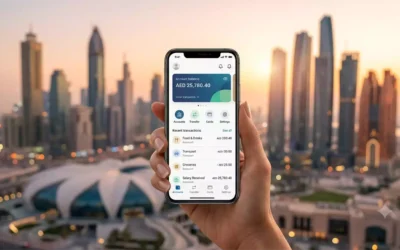
UAE Tourist Identity: Instant Digital Bank Account Launch
The Central Bank of the UAE, ICP, and ADCB have launched a digital identity-linked banking service allowing non-resident visitors to open an account and receive a debit card within minutes of arrival.

Best Residency by Investment Programs 2026
Compare 10 residency by investment programs in 2026: Greece, UAE, Portugal, Malta, Hungary, Germany, Latvia, Cyprus, USA EB-5, Türkiye. Analysis by NTL International.