The requirements for the EU Blue Card vary across member states, as there is no unified system at the EU level. Each country has its conditions, typically high academic qualifications, a job offer from an approved employer, and a specific minimum income threshold. It is important to note that the EU Blue Card is available in most Schengen Area countries, excluding Denmark and Ireland, which do not participate in the program.
Key Requirements for the EU Blue Card in 2025
Minimum Salary Threshold:
Each country sets its minimum salary requirement for applicants. For instance:
-
- Germany: €58,400 (or €45,552 for shortage occupations, based on 2024 rates).
- France: €55,419 annually.
- Netherlands: Approximately €5,670 per month (as of 2024 rates).
Qualification Recognition:
-
- All countries require a recognized university degree or an equivalent qualification.
- Some may demand additional recognition of foreign credentials, such as using the Anabin system in Germany for degree evaluation.
Job Offer Requirements:
-
- Applicants must have a binding employment contract or a formal job offer.
- Priority is often given to candidates in shortage occupations (e.g., IT, engineering, and healthcare).
Language Requirements:
-
- Most countries do not impose strict language requirements for obtaining the Blue Card.
- However, proficiency in the local language may be necessary for certain professions, such as medical roles in Germany or Austria.
Processing Times:
-
- Application processing times vary significantly, ranging from a few weeks in countries like Estonia to several months in countries like Italy.
Transition to Permanent Residency:
-
- The duration required to transition to permanent residency differs across countries:
- Germany: 33 months (or 21 months with sufficient German language skills).
- France: 5 years of cumulative residency within the EU.
- The duration required to transition to permanent residency differs across countries:
Family Reunification:
-
- Family members typically receive residence permits and the right to work.
- Specific policies, such as waiting periods or proof of financial stability, vary by country.
Targeted Professions:
-
- Certain countries focus on specific sectors or professions due to local labor shortages (e.g., IT in Finland, healthcare workers in Belgium).
Schengen Area Countries Participating in the EU Blue Card Program:
The EU Blue Card is widely available across the Schengen Area. Participating countries include:
The EU Blue Card offers broad accessibility in the Schengen Area, but the application requirements and conditions differ between countries. For those interested in this opportunity, it is beneficial to provide tailored guidance for each country to help clients choose the best destination based on their qualifications and objectives.

US Visa Bond Program Becomes Permanent: Impact on Antigua and Barbuda, Dominica, Grenada, and Vanuatu Citizenship by Investment
The US Department of State has made its B-1/B-2 visa bond program permanent, effective 3 August 2026, raising bond amounts to $10,000-$20,000. Citizenship by Investment without a residency requirement remains an explicit qualifying criterion, directly affecting Antigua and Barbuda, Dominica, Grenada, and Vanuatu.
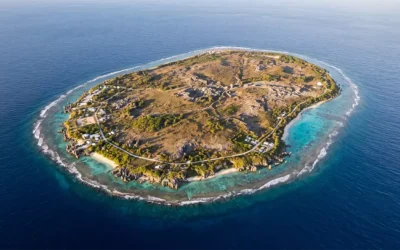
Nauru Is Now the Republic of Naoero: What It Means for the Citizenship Program
The Republic of Nauru has officially adopted the name Republic of Naoero. Citizenship Certificates now bear the new name; passports remain issued as Nauru during the transition.

EU Caribbean CBI Phase-Out by 2028: What the Visa Suspension Mechanism Means for Investors
The EU’s revised Visa Suspension Mechanism now treats CBI programme operation itself as suspension grounds. Antigua & Barbuda, Dominica, Grenada, St Kitts & Nevis, and Saint Lucia have reportedly been asked to phase out by 1 June 2028.

UAE Tourist Identity: Instant Digital Bank Account Launch
The Central Bank of the UAE, ICP, and ADCB have launched a digital identity-linked banking service allowing non-resident visitors to open an account and receive a debit card within minutes of arrival.

Best Residency by Investment Programs 2026
Compare 10 residency by investment programs in 2026: Greece, UAE, Portugal, Malta, Hungary, Germany, Latvia, Cyprus, USA EB-5, Türkiye. Analysis by NTL International.
US Visa Bond Program Becomes Permanent: Impact on Antigua and Barbuda, Dominica, Grenada, and Vanuatu Citizenship by Investment
The US Department of State has made its B-1/B-2 visa bond program permanent, effective 3 August 2026, raising bond amounts to $10,000-$20,000. Citizenship by Investment without a residency requirement remains an explicit qualifying criterion, directly affecting Antigua and Barbuda, Dominica, Grenada, and Vanuatu.
Nauru Is Now the Republic of Naoero: What It Means for the Citizenship Program
The Republic of Nauru has officially adopted the name Republic of Naoero. Citizenship Certificates now bear the new name; passports remain issued as Nauru during the transition.
EU Caribbean CBI Phase-Out by 2028: What the Visa Suspension Mechanism Means for Investors
The EU’s revised Visa Suspension Mechanism now treats CBI programme operation itself as suspension grounds. Antigua & Barbuda, Dominica, Grenada, St Kitts & Nevis, and Saint Lucia have reportedly been asked to phase out by 1 June 2028.
UAE Tourist Identity: Instant Digital Bank Account Launch
The Central Bank of the UAE, ICP, and ADCB have launched a digital identity-linked banking service allowing non-resident visitors to open an account and receive a debit card within minutes of arrival.
Best Residency by Investment Programs 2026
Compare 10 residency by investment programs in 2026: Greece, UAE, Portugal, Malta, Hungary, Germany, Latvia, Cyprus, USA EB-5, Türkiye. Analysis by NTL International.