
Investment Residency programs gained significant traction in the first half of 2025 as international investors searched for dependable paths to geographic diversification and long‑term security. The list that follows is arranged by the programs most frequently requested by NTL clients during the first six‑month of 2025. Each route offers clear benefits: increased mobility, residence rights in economically resilient countries, and, in several cases, a pathway toward a second citizenship once statutory residence requirements are met.
Best Investment Residency Programs for 2025:
1. Portugal – D7 & D2 Residency

The D7 passive‑income visa remains the most popular Investment Residency path among NTL clients in the first half of 2025. Applicants must prove regular, non‑salary income equal to the Portuguese monthly minimum wage, which is €870 for a single applicant in 2025. No property purchase is required. Approved applicants receive a two‑year residence card that can be renewed until they reach five years of lawful residence, after which they may apply for permanent residence and, under the legislation currently in force, Portuguese citizenship.
On 23 June 2025 the Council of Ministers forwarded a bill to Parliament that would extend this citizenship residency requirement to ten years for most applicants and seven years for citizens of Portuguese‑speaking countries. The proposal is still awaiting a parliamentary vote, expected in the September 2025 session.
Entrepreneurs gravitate toward the D2 residence permit. It requires registering a company, submitting a viable business plan, and injecting sufficient share capital. This path also leads to permanent residence and potential citizenship on the same timeline as the D7, provided the law remains unchanged when the applicant completes the qualifying residence.
Portugal’s property‑linked Golden Visa route was curtailed by the 2023 “More Housing” law; only cultural, scientific, and fund‑investment tracks remain. Consequently, investors now favor the D7 or D2 as cost‑effective avenues that still lead to full citizenship after five years of residence. The programs particularly suit retirees, remote professionals with passive income, and founders seeking an EU base with access to the Schengen area.
2. United Arab Emirates – Golden Visa
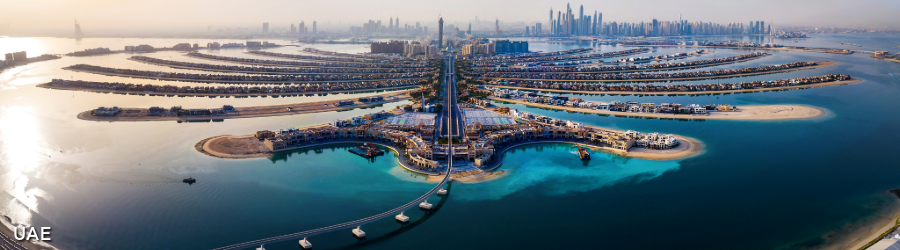
The UAE Golden Visa remains one of the most sought‑after residence options among Investors. They secure either a ten‑year or five‑year permit by committing at least AED 2 million to qualifying assets. The most common route is real estate: applicants purchase completed or off‑plan property of that value. An alternative is to place the same amount in an accredited investment fund or as paid‑up share capital in a UAE‑licensed company. Entrepreneurs can also qualify with an innovative project valued at no less than AED 500,000 or annual revenue above AED 1 million, provided the venture is endorsed by an approved incubator or government entity.
Successful applicants gain residence without a local sponsor, may live abroad for more than six months without losing status, and can sponsor spouses, children of any age, and unlimited household staff.
Property investors typically receive a five‑year permit that can be renewed as long as the asset is retained, while fund investors and high‑capital entrepreneurs are granted ten‑year cards.
Demand has continued to climb, supported by the UAE’s zero personal income tax, streamlined electronic application process, and strong rental yields in Dubai and Abu Dhabi.
The Golden Visa is not a citizenship pathway. Naturalisation in the UAE is granted only by presidential decree and usually after several decades of residence or exceptional contribution. Investors therefore treat the program as a long‑term base in a stable, high‑growth economy rather than a route to a second passport.
3. Malta – Permanent Residency (MPRP)
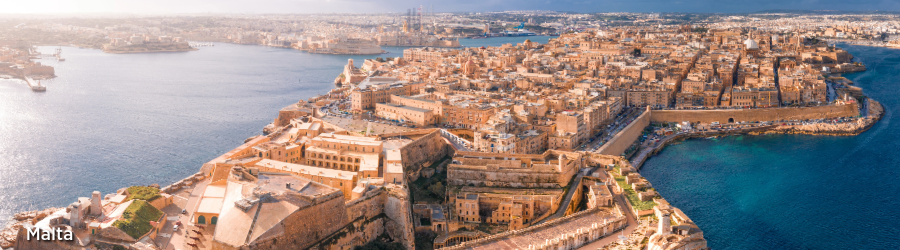
The Malta permanent residency Program grants lifelong EU residence to non‑EU investors who satisfy three financing elements. Applicants either buy residential property worth at least €375,000 or rent for no less than €14,000 per year, commit a government contribution of €60,000 when renting or €30,000 when buying, and donate €2,000 to a Maltese charity. A separate government application fee of €50,000 for the main applicant applies. These sums must be maintained for five years, after which the real‑estate holding may be sold or the lease ended.
The permit confers permanent residence from day one with no minimum stay to keep the status, allowing free movement throughout the Schengen area for 90 days in any 180. While the programme itself is not a citizenship track, holders who complete five years of effective residence in Malta and meet language, integration, and tax requirements may lodge a naturalisation application under the general citizenship law.
Investors choose the MPRP to secure an EU foothold without the annual physical‑presence obligations common in other schemes.
4. Greece – Golden Visa

Greece’s investment residency program continues to attract property investors despite the higher thresholds that took effect on 1 January 2025. A single property purchase of at least €800,000 is now required in prime zones such as Athens, Thessaloniki, Mykonos, and Santorini, while most other urban areas call for a minimum of €400,000. The long‑standing €250,000 level survives only for projects that convert commercial buildings to residential use or restore listed properties outside major cities. Investors who prefer paper assets can subscribe at least €350,000 in a licensed investment fund, or place €500,000 in a term deposit or government bonds.
Successful applicants receive a five‑year residence permit that can be renewed indefinitely as long as the qualifying asset is held. There is no minimum in‑country stay to keep the status, which makes the scheme popular with non‑resident investors seeking an EU foothold. Those who do intend to naturalize must complete seven years of actual residence, file Greek tax returns, and pass tests in language and civic knowledge.
The program remains flexible because family members are included under the same investment and investors may choose among several asset classes. The recent rise in entry costs has slowed volume in the prime coastal markets, yet demand persists among clients who value Schengen access and the option to progress toward an EU passport once the residence and integration requirements are met.
5. Spain – Golden Visa

In fact, Spain closed its Golden Visa to new applicants on 3 April 2025. Until that deadline non‑EU investors could gain residence by purchasing property for at least €500 000 or placing €1 million in a Spanish bank, and existing permit‑holders may keep renewing while they hold the qualifying asset.
With the investment door now shut, attention has shifted to the Digital Nomad Visa created by the Startup Law 28/2022, which grants an initial one‑year residence (extendable to three) to remote employees or freelancers who earn at least €2,520 a month from foreign sources and can show a year of professional history.
Spanish nationality is available after ten years of continuous residence (two for citizens of Latin America, Portugal, and the Philippines) plus language and civics exams. Remote workers who relocate under the Nomad route must therefore plan for physical presence and eventual tax residence if their long‑term goal is an EU passport. Spain remains appealing for its quality of life and large internal market, but the end of the Golden Visa means that would‑be residents now need to contribute active economic activity rather than passive capital.
6. Türkiye – Real Estate Residency

Turkey issues a renewable short‑term residence permit to foreign nationals who purchase residential real estate worth at least $ 200,000, with the value recorded on the title deed and confirmed by a municipal valuation report. The permit is initially valid for up to two years and may be extended as long as the property remains in the applicant’s name. Family members are not added automatically: a spouse or minor children can be included in the same residence category only if they hold joint ownership of the property; otherwise, they must apply separately under the family‑residence rules once the main applicant has obtained status.
7. Hungary – Golden Visa (GIP)

Hungary reopened its residence‑by‑investment route in mid‑2024 under the Guest Investor Programme, positioning itself as one of Europe’s least expensive options.
A non‑EU applicant can qualify by acquiring at least €250,000 in units of a real‑estate investment fund registered with the Hungarian National Bank, or by donating €1 million to a public‑interest trust supporting higher education, science, or the arts.
The resulting residence permit is issued for ten years and may be renewed for another decade. The main investor may include a spouse and minor children in the same application and there is no stipulated minimum stay to keep the status, although maintaining a local address and health insurance is required at renewal.
Those who make Hungary their primary base can pursue citizenship after eight consecutive years of lawful residence, provided they pass a Hungarian language interview, demonstrate integration, and present a clean criminal record. Investors therefore view the programme as a long‑term, low‑entry gateway to the European Union, with the option of an EU passport once the residence and integration criteria have been satisfied.
8. Germany – Business Establishment Residency

Germany offers a residence permit for self‑employed investors who establish a business that serves an economic interest, shows positive regional impact, and secures financing. There is no statutory minimum capital, yet state authorities generally expect a capital of at least €250,000 and a credible plan to create one or more local jobs. The permit is usually issued for three years; if the venture proves viable and the entrepreneur can cover living costs, it can be converted to permanent residence at the end of that period.
Under the nationality reform that entered into force on 27 June 2024, naturalisation is possible after five years of lawful residence, or three years for applicants who demonstrate exceptional integration such as advanced German language skills or civic engagement. The programme appeals to founders and highly skilled professionals who wish to anchor their company inside Europe’s largest economy while progressing toward an EU passport on a relatively fast timeline.
9. Canada – Regional Investor Programs

Several Canadian provinces run entrepreneur immigration streams that grant a work permit first, leading to permanent residence once the business plan is executed and local jobs are created. Most provincial programs set the minimum personal investment at about 150,000 CAD, though some urban categories require 200,000 CAD or more, and each province adds net‑worth and management‑experience criteria. After operating the business for twelve to twenty months and meeting job‑creation targets, the investor receives a provincial nomination that converts to permanent residence within roughly a year.
Canadian citizenship becomes an option once the applicant has held permanent residence long enough to accumulate three years of physical presence in the country within a rolling five‑year window, so most investors reach passport eligibility between year three and year five from arrival. Spouses and dependent children are included in the same application, and Canada’s strong legal protections, advanced infrastructure, and access to the United States‑Mexico‑Canada trade market make these regional entrepreneur streams attractive to founders who plan to manage their ventures directly in a stable business environment.
10. United States – Investor Visa (E-2)

The E2 treaty investor visa remains the quicker and more affordable way for nationals of treaty countries to enter the US market. While there is no statutory minimum, successful cases usually deploy at least $150,000 into a new or existing business that the investor controls. The visa is issued for up to five years at a time and can be renewed indefinitely as long as the enterprise remains active and profitable. Family members receive dependent status and children may attend school, but the visa itself does not lead directly to a green card.
While investors who need a clear path to citizenship turn to the EB‑5 Immigrant Investor Programme. It requires placing $800,000 in a government‑approved regional‑center project located in a high‑unemployment or rural area, or $1,050,000 in any other commercial venture that creates at least ten full‑time US jobs. Approval yields a two‑year conditional green card that converts to permanent residence once the job target is proven, and US citizenship becomes available after five years of holding unconditional residence.
Investment residency programs continue to evolve, offering investors a practical way to diversify their geographic footprint and protect their wealth in an increasingly unpredictable world. Each jurisdiction balances capital requirements, processing speed, and long‑term benefits differently, so the most suitable option depends on personal goals, risk tolerance, and expected time horizon. Because several governments have already updated their rules in 2025, and others have bills pending the relative appeal of each program can shift quickly. Periodic reviews of policy changes, tax implications, and secondary‑market property trends are therefore essential before committing funds.
NTL monitors these developments in real time and translates them into clear, actionable advice. Whether you need a quick market entry, a pathway to a future passport, or a family‑friendly base for global mobility, our specialists can design a strategy that aligns with your budget and growth plans while anticipating regulatory shifts. Contact us to explore the current opportunities and position yourself for the next stage of your international expansion.

US Visa Bond Program Becomes Permanent: Impact on Antigua and Barbuda, Dominica, Grenada, and Vanuatu Citizenship by Investment
The US Department of State has made its B-1/B-2 visa bond program permanent, effective 3 August 2026, raising bond amounts to $10,000-$20,000. Citizenship by Investment without a residency requirement remains an explicit qualifying criterion, directly affecting Antigua and Barbuda, Dominica, Grenada, and Vanuatu.
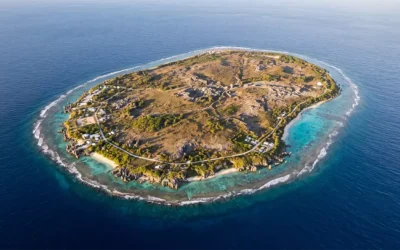
Nauru Is Now the Republic of Naoero: What It Means for the Citizenship Program
The Republic of Nauru has officially adopted the name Republic of Naoero. Citizenship Certificates now bear the new name; passports remain issued as Nauru during the transition.

EU Caribbean CBI Phase-Out by 2028: What the Visa Suspension Mechanism Means for Investors
The EU’s revised Visa Suspension Mechanism now treats CBI programme operation itself as suspension grounds. Antigua & Barbuda, Dominica, Grenada, St Kitts & Nevis, and Saint Lucia have reportedly been asked to phase out by 1 June 2028.

UAE Tourist Identity: Instant Digital Bank Account Launch
The Central Bank of the UAE, ICP, and ADCB have launched a digital identity-linked banking service allowing non-resident visitors to open an account and receive a debit card within minutes of arrival.

Best Residency by Investment Programs 2026
Compare 10 residency by investment programs in 2026: Greece, UAE, Portugal, Malta, Hungary, Germany, Latvia, Cyprus, USA EB-5, Türkiye. Analysis by NTL International.