
US Birthright Citizenship 2026: What Changes to Expect
Key Regulatory Takeaways
- The 14th Amendment Citizenship Clause has guaranteed birthright citizenship to nearly all persons born in the United States since its 1868 ratification, reinforced by the 1898 Supreme Court ruling in United States v. Wong Kim Ark.
- Executive Order 14160, signed January 20, 2025, directs federal agencies to withhold citizenship documents from children born in the US to undocumented immigrants and certain temporary visa holders, applying to births on or after February 19, 2025.
- Federal courts blocked the order from taking effect, and the Supreme Court heard oral argument in Trump v. Barbara (Docket No. 25-365) on April 1, 2026, after granting certiorari before judgment.
- The constitutional question is whether Executive Order 14160 complies with the 14th Amendment's Citizenship Clause and its statutory codification at 8 U.S.C. § 1401(a).
- A ruling is expected before the current Supreme Court term concludes in early July 2026.
- EB-5 conditional residents, E-2 treaty investors, and prospective US-bound investors with growing families should reassess their citizenship planning ahead of the decision.
- Caribbean Citizenship by Investment and European Residency by Investment programmes provide established Plan B pathways for investors seeking insulation from US policy volatility.
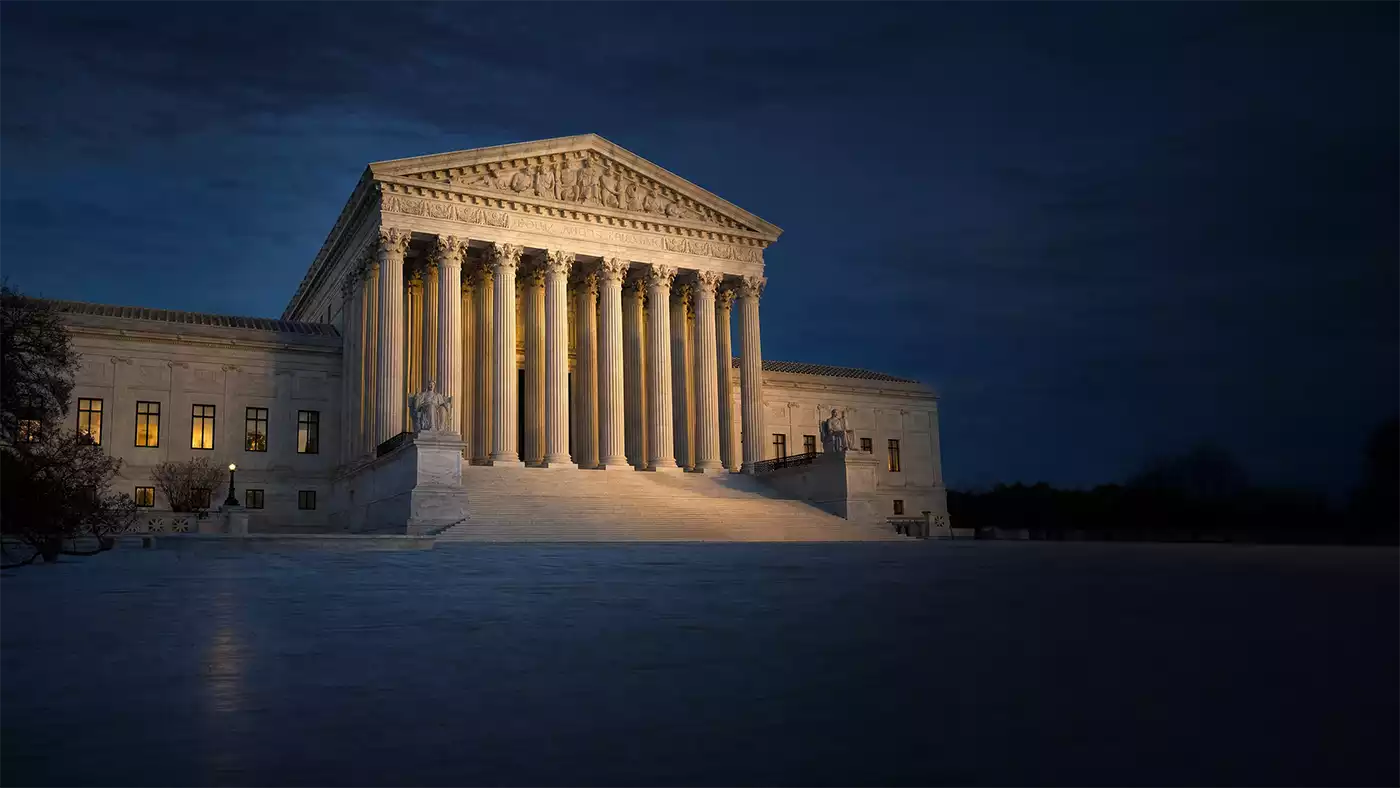
For more than 125 years, US birthright citizenship has rested on a single sentence in the 14th Amendment and a single Supreme Court ruling, United States v. Wong Kim Ark (1898), interpreting it. That settled framework is now under direct constitutional review for the first time in living memory. The Supreme Court is preparing to rule on Trump v. Barbara, Docket No. 25-365, in what is expected to be one of the most consequential constitutional cases of the modern era.
For investors, the question is not political. It is operational. The Citizenship Clause has been a quiet but reliable feature of American immigration planning for generations of high-net-worth families: a US-born child is a US citizen, irrespective of the parents' visa status at the time of birth. If the Supreme Court narrows that rule in 2026, the calculus around the EB-5 Immigrant Investor Program, the E-2 Treaty Investor visa, and US real estate planning for family-stage investors changes materially.
This analysis sets out the current rules, the precise scope of the executive order under review, the legal questions before the Court, the realistic range of outcomes, and the strategic options NTL International is reviewing with affected clients.
Current US Birthright Citizenship Rules Under the 14th Amendment
As of May 2026, US birthright citizenship continues to operate under the long-established framework set by two foundational instruments:
The 14th Amendment Citizenship Clause (1868)
The Citizenship Clause, ratified in the aftermath of the American Civil War, provides that "All persons born or naturalized in the United States, and subject to the jurisdiction thereof, are citizens of the United States and of the State wherein they reside." Its original purpose was to constitutionally guarantee citizenship to formerly enslaved persons and their descendants, overruling the Dred Scott decision.
The Statutory Codification at 8 U.S.C. § 1401(a)
Congress codified the Citizenship Clause in the Immigration and Nationality Act. The statute states that a person born in the United States, and subject to the jurisdiction thereof, is a US national and citizen at birth. This provision is the operative federal law applied by USCIS, the State Department, and the Social Security Administration when issuing US passports, certificates of citizenship, and Social Security numbers.
United States v. Wong Kim Ark (1898): The Controlling Precedent
The Supreme Court held in Wong Kim Ark that a child born in San Francisco to Chinese immigrant parents who were lawfully resident but statutorily barred from naturalization was a US citizen at birth under the 14th Amendment. The ruling established the territorial principle of jus soli (right of the soil) as the dominant rule in US nationality law, with narrow exceptions limited to children of foreign diplomats, children of hostile occupying forces, and (historically) children of Native American tribes maintaining tribal sovereignty (the latter subsequently resolved by the Indian Citizenship Act of 1924).
The practical effect is straightforward. Any child born on US soil, regardless of the immigration status of either parent, is a US citizen at birth unless one of the narrow Wong Kim Ark exceptions applies. This rule has been administered without serious challenge by every federal administration from 1898 to January 2025.
What Executive Order 14160 Proposes to Change
On January 20, 2025, the first day of his second term, President Trump signed Executive Order 14160, titled "Protecting the Meaning and Value of American Citizenship." The order directs every department and agency of the federal executive branch to decline to issue documents recognizing US citizenship, including US passports and Social Security cards, to a child born in the United States on or after February 19, 2025, in either of the following circumstances:
- The child's mother was unlawfully present in the United States at the time of the birth, and the child's father was not a US citizen or lawful permanent resident at that time.
- The child's mother was lawfully but temporarily present in the United States (for example, on a student, tourist, or work visa) at the time of the birth, and the child's father was not a US citizen or lawful permanent resident at that time.
The constitutional theory behind the order, advanced by the Department of Justice in its briefing to the Supreme Court, is that the phrase "subject to the jurisdiction thereof" in the Citizenship Clause was intended to require something beyond mere territorial presence: a meaningful political allegiance and a permanent (not temporary or unlawful) domicile. On that reading, children of undocumented immigrants and children of temporary visa holders fall outside the clause and are therefore not constitutionally entitled to automatic birthright citizenship.
It is critical to note that, as of May 2026, the order is not in operational effect. Lower courts in the District of New Hampshire and the First Circuit Court of Appeals issued injunctions blocking implementation, and the Supreme Court granted certiorari before judgment to resolve the question on the merits.
Trump v. Barbara at the Supreme Court: The Legal Battle Explained
The litigation now before the Court is captioned Donald J. Trump, President of the United States, et al., v. Barbara, et al., Docket No. 25-365. It originated as a class action brought by the American Civil Liberties Union and affiliated civil rights organizations on behalf of families affected by the executive order. Procedurally, the case reached the Supreme Court through the following path:
- July 10, 2025: The District of New Hampshire granted a classwide preliminary injunction against the executive order.
- September 2025: The government filed notice of appeal to the First Circuit.
- Late 2025: The Supreme Court granted certiorari before judgment, allowing the case to bypass the appellate court and proceed directly to the merits.
- April 1, 2026: Oral argument was held before the full bench of the Supreme Court.
The Single Question Before the Court
The question presented in the government's petition is narrow but determinative: whether Executive Order 14160 complies on its face with the Citizenship Clause of the 14th Amendment and with 8 U.S.C. § 1401(a), which codifies that clause.
The Two Competing Constitutional Theories
The government's position relies on Elk v. Wilkins (1884), in which the Court excluded Native Americans owing primary allegiance to tribal nations from automatic citizenship under the Citizenship Clause. The Solicitor General argues that "subject to the jurisdiction thereof" carries the same meaning today: it requires permanent domicile and meaningful political allegiance, both of which, the government contends, are absent in the case of undocumented and temporary visa-holding parents.
The respondents rely on United States v. Wong Kim Ark (1898), which interpreted the same clause to extend birthright citizenship to virtually every child born on US soil with only the narrow exceptions noted above. The respondents argue that the text, the historical context of the 14th Amendment's drafting, the codification at 8 U.S.C. § 1401(a), and more than a century of consistent administrative practice all foreclose the government's reading.
What the Bench Focused On at Oral Argument
The questioning at oral argument addressed both the substantive constitutional theory and the administrative consequences of a ruling for the government. The bench probed the practical mechanics of how parental immigration status would be verified at the moment of birth, what evidentiary standards would apply, and what would happen to the millions of US citizens whose citizenship has been recognized under the prevailing interpretation. These practical questions, distinct from the pure constitutional analysis, often signal where a majority's discomfort lies.
Three Possible Outcomes for US Birthright Citizenship in 2026
A constitutional ruling at the Supreme Court is rarely binary. Investors and advisors should plan for a range of outcomes rather than a single forecast.
Scenario 1: The Court Strikes Down Executive Order 14160
The most likely outcome based on the weight of precedent. The Court would reaffirm Wong Kim Ark, hold that 8 U.S.C. § 1401(a) and the Citizenship Clause continue to grant citizenship to nearly all persons born on US soil, and rule that the executive branch cannot, by order, redefine constitutional citizenship without a constitutional amendment or explicit congressional action. Under this outcome, the status quo for foreign investors remains intact.
Scenario 2: The Court Upholds the Order in Full
The order takes effect for births on or after February 19, 2025. Children born to E-2 visa holders, B-1/B-2 visitors, F-1 students, and other temporary nonimmigrant status holders would not receive automatic US citizenship. EB-5 applicants whose conditional residency has not yet been granted at the time of birth would also be affected. The order would create the administrative requirement, raised at oral argument, of verifying parental immigration status at every US birth. Substantial implementation litigation would follow.
Scenario 3: A Narrow or Splintered Ruling
The Court may issue a ruling that resolves only part of the question, that distinguishes between undocumented and temporary-status parents, that remands on procedural grounds, or that produces a fragmented plurality without a clear majority rule. This is the planning scenario that should concern advisors most, because it produces sustained legal uncertainty without a clean rule. Different federal circuits, state vital records offices, and federal agencies could end up applying inconsistent standards while implementation litigation works its way back through the system.
How a Ruling Could Affect EB-5 and E-2 Investors
The investor-facing impact of any ruling depends on the parents' immigration status at the moment of the child's birth, not at any later moment. This is the operative legal point that often goes underexamined in commentary on the case.
EB-5 Immigrant Investor Program
The EB-5 process involves an initial Form I-526 / I-526E petition, followed by either consular processing or adjustment of status, leading to conditional permanent residence, and eventually, after two years and a successful Form I-829 petition, full lawful permanent residence. A child born to an EB-5 applicant before conditional residency is granted (a common occurrence given multi-year processing times) is currently a US citizen at birth. Under Scenario 2 or Scenario 3 above, that child's citizenship would become uncertain.
E-2 Treaty Investor Visa
The E-2 visa is, by design, a nonimmigrant status. The investor and dependents are admitted as temporary visitors regardless of how many years of continuous renewal accumulate. Under Scenario 2, children born to E-2 principals or dependents would not receive automatic US citizenship. This is the single largest categorical impact for the investor visa cohort, because the E-2 has historically been used by families precisely on the assumption that US-born children would be US citizens.
B-1/B-2, F-1, H-1B, and Other Nonimmigrant Categories
The same logic applies to short-term business visitors, tourists, students, and (depending on interpretation) certain employment-based nonimmigrant categories. The order's text reaches all parents who are "temporarily present" rather than lawful permanent residents or citizens.
Lawful Permanent Residents and US Citizens
Families in which at least one parent is a US citizen or lawful permanent resident at the time of birth are not affected by the order or by any scenario described above. The 14th Amendment's protection for these children is not in question.
Implications for Investors: Plan B Strategy
The strategic lesson of Trump v. Barbara for high-net-worth investors is one NTL has been making for several years: citizenship and residency planning should never depend on a single jurisdiction's continued policy stability. This applies to the United States today as much as it has applied to other jurisdictions that experienced sudden policy reversals in the recent past.
The Three-Layer Portfolio Approach
Layer 1: A second citizenship secured through a Caribbean CBI programme. Saint Kitts and Nevis, Grenada, Dominica, Saint Lucia, and Antigua and Barbuda each offer statutory citizenship by investment pathways with established legal foundations and verifiable processing standards. These passports provide visa-free or visa-on-arrival access to a wide range of destinations and confer a citizenship that is not dependent on any single nation's domestic political cycle.
Layer 2: A residency permit in a stable jurisdiction. Portugal, Greece, Italy, the United Arab Emirates, and Uruguay each offer well-defined residency by investment frameworks. A residency permit is not a citizenship but it provides physical presence rights, a base of operations, and (in many programmes) a documented pathway toward eventual naturalization on a predictable timeline.
Layer 3: Reassessment of the US-only assumption. Families whose long-term planning has assumed that a US-born child equals a US citizen should review that assumption with US immigration counsel before any pending US birth, particularly where the planned pregnancy will occur while at least one parent is on a nonimmigrant US status or holds no US status at all.
What NTL Is Doing for Affected Clients
For clients with current or planned US exposure, NTL is conducting individualized portfolio reviews against the three scenarios outlined above, mapping each client's current immigration posture against the order's text, and where appropriate, coordinating Caribbean CBI or European RBI applications in parallel so that a Plan B is operationally available regardless of how the Supreme Court rules. For clients with no current US exposure, the case is a useful illustration of why every investor needs a Plan B as a baseline, not as a contingency.
The legal architecture of US birthright citizenship has been a quiet stabiliser for high-net-worth families with US exposure for over a century. Trump v. Barbara does not yet change that, and the most likely outcome is that the Court will reaffirm Wong Kim Ark. But the case is a reminder that even the most settled constitutional rules can be reopened. A serious investor's citizenship plan should not depend on the assumption that any single jurisdiction will remain unchanged. It should be a portfolio.
Frequently Asked Questions About US Birthright Citizenship 2026
What is the current rule on US birthright citizenship in 2026?
As of May 2026, the 14th Amendment's Citizenship Clause and its statutory codification at 8 U.S.C. § 1401(a) continue to grant US citizenship to nearly all persons born on US soil, regardless of parental immigration status. Executive Order 14160 has been blocked by federal courts and its enforcement is suspended pending the Supreme Court's ruling in Trump v. Barbara.
What is Trump v. Barbara and what does it mean for US birthright citizenship?
Trump v. Barbara (Docket No. 25-365) is the consolidated US Supreme Court case challenging Executive Order 14160. Oral argument was heard on April 1, 2026. The Court will decide whether the order complies with the 14th Amendment Citizenship Clause and 8 U.S.C. § 1401(a). A ruling is expected before the Court's term concludes in early July 2026.
How could a ruling in Trump v. Barbara affect EB-5 and E-2 investors with children born in the US?
If the Supreme Court upholds Executive Order 14160 in full or in part, children born in the United States to E-2 visa holders or to EB-5 applicants before conditional residency is granted may no longer receive automatic US citizenship at birth. The precise scope would depend on the Court's reasoning and any limiting principles applied to the ruling.
What Plan B options exist for investors concerned about US birthright citizenship changes?
Investors seeking insulation from US policy volatility commonly diversify into Caribbean Citizenship by Investment programmes (Saint Kitts and Nevis, Grenada, Dominica, Saint Lucia, Antigua and Barbuda), Pacific CBI options such as Nauru and Vanuatu, and European Residency by Investment programmes including Portugal, Greece, and Italy. NTL advises on building a CBI and RBI portfolio rather than relying on any single jurisdiction.
When will the Supreme Court rule on US birthright citizenship in 2026?
The Supreme Court's current term concludes in late June or early July 2026. A ruling in Trump v. Barbara is expected before the term ends. The Court may issue its decision earlier given the constitutional significance of the case and the cert before judgment posture.
Conclusion: Monitoring US Birthright Citizenship Developments
US birthright citizenship is, for now, what it has been for 128 years. The Supreme Court's ruling in Trump v. Barbara will determine whether that remains the case or whether 2026 marks a structural shift in US nationality law. For investors with US exposure, the prudent response is not to predict the outcome but to ensure that an existing Plan B is in place before the decision is announced. NTL International is reviewing affected client portfolios on an individual basis and is available to advise on Caribbean CBI, Pacific CBI, and European RBI alternatives that provide structural insulation from US policy outcomes.
Request Your Eligibility Assessment
Handled exclusively by our senior advisory team. All communications are confidential.
About NTL International
NTL provides professional guidance and compliance support for global Citizenship by Investment and Residency by Investment programmes. As a government-authorized agent in select jurisdictions and collaborator with specialized legal experts worldwide, NTL manages the entire application process, ensuring every application meets statutory requirements from initial assessment through final approval, working with local counsel for full compliance.
NTL's compliance practice serves licensed advisors, family offices, and high-net-worth individuals seeking regulatory-grade analysis of cross-border immigration and nationality frameworks. The firm advises only on programmes with established legal foundations and verifiable processing standards.
For clients with current or planned US exposure ahead of the Trump v. Barbara ruling, NTL is conducting individualized portfolio reviews, mapping each client's immigration posture against the realistic range of Supreme Court outcomes, and where appropriate, coordinating Caribbean CBI applications (Saint Kitts and Nevis, Grenada, Dominica, Saint Lucia, Antigua and Barbuda), Pacific CBI options (Nauru, Vanuatu), and European RBI applications (Portugal, Greece, Italy) in parallel so that a Plan B is operationally available regardless of how the Court rules.