Regarding Vanuatu’s Citizenship by Investment Program, the government continues to attract international investors and strengthen the country’s global standing among nations offering second citizenship programs. In this regard, the government has recently introduced a series of updates to Vanuatu’s Citizenship by Investment Program, targeting the Capital Investment Immigration Plan (CIIP) and citizenship acquisition through donations and the Development Support Program (DSP). These updates aim to enhance the investor experience and increase the appeal of these programs, further solidifying Vanuatu’s position as a preferred destination for investment and business.
Reduced Investment Period for the CIIP Capital Option:
One of the most significant updates announced by the government is the reduction of the investment period in the Sustainable Cocoa Fund (CSF) from 5 years to 4 years. This change gives investors the advantage of faster capital and profit recovery, making the CIIP more attractive and flexible.
Additionally, the Vanuatu Citizenship by Investment Program under the CIIP capital investment option has seen an adjustment in its fee structure, with the primary fee set at $155,000. Furthermore, the comprehensive fee for a family of four has been set at $160,500. This adjustment reflects the administrative costs and minor fees associated with the investment process, providing investors with a clear view of the expected costs.
Unified Criminal Background Check Fees in Vanuatu’s Citizenship by Investment Program:
In a move aimed at simplifying procedures, the government has unified the criminal background check fees for both the CIIP and DSP programs, setting them at $5,500. The approval period for criminal background checks has also been extended to 14 days to ensure thorough vetting of all applicants.
New Passport Renewal Requirements in Vanuatu:
Alongside the updates to Vanuatu’s Citizenship by Investment Program, the Vanuatu government has announced the implementation of a new passport system, which will come into effect after August 31, 2024. Under this new system, all Vanuatu citizens, including those who acquired citizenship through investment, must undergo a personal identity verification interview and submit biometric data when applying for a passport.
Impact of the New Passport System on Investors:
Investors are expected to face some challenges due to this update, particularly regarding the need to travel to Vanuatu to complete passport application procedures. In this context, local agents have requested an urgent meeting with the Citizenship Commission to discuss alternative options, such as allowing applicants to fulfill the personal appearance requirements at Vanuatu consulates or embassies abroad. Despite these changes, it is important to note that the process for granting citizenship itself remains unchanged.
To conclude, if you are interested in getting a second citizenship in Vanuatu do not hesitate to contact oue experts in Carribean CBI programs at NTL.

US Visa Bond Program Becomes Permanent: Impact on Antigua and Barbuda, Dominica, Grenada, and Vanuatu Citizenship by Investment
The US Department of State has made its B-1/B-2 visa bond program permanent, effective 3 August 2026, raising bond amounts to $10,000-$20,000. Citizenship by Investment without a residency requirement remains an explicit qualifying criterion, directly affecting Antigua and Barbuda, Dominica, Grenada, and Vanuatu.
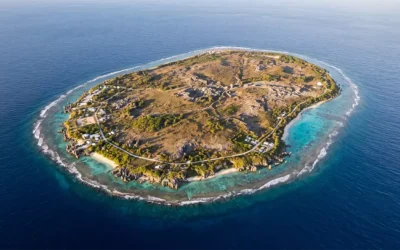
Nauru Is Now the Republic of Naoero: What It Means for the Citizenship Program
The Republic of Nauru has officially adopted the name Republic of Naoero. Citizenship Certificates now bear the new name; passports remain issued as Nauru during the transition.

EU Caribbean CBI Phase-Out by 2028: What the Visa Suspension Mechanism Means for Investors
The EU’s revised Visa Suspension Mechanism now treats CBI programme operation itself as suspension grounds. Antigua & Barbuda, Dominica, Grenada, St Kitts & Nevis, and Saint Lucia have reportedly been asked to phase out by 1 June 2028.

UAE Tourist Identity: Instant Digital Bank Account Launch
The Central Bank of the UAE, ICP, and ADCB have launched a digital identity-linked banking service allowing non-resident visitors to open an account and receive a debit card within minutes of arrival.

Best Residency by Investment Programs 2026
Compare 10 residency by investment programs in 2026: Greece, UAE, Portugal, Malta, Hungary, Germany, Latvia, Cyprus, USA EB-5, Türkiye. Analysis by NTL International.