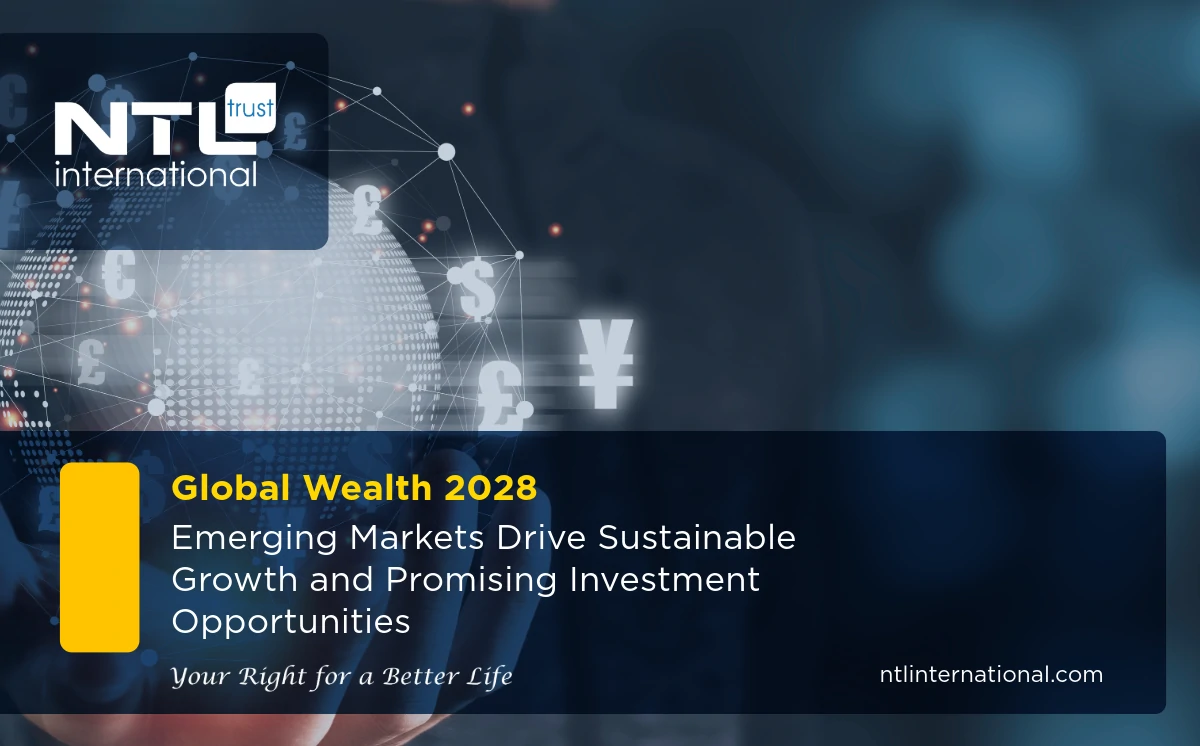
As the global economy takes shape, investors are looking ahead for growth opportunities in the world of wealth.
Our report provides exclusive insights into global wealth projections for 2028, highlighting key trends and investment opportunities worth considering. Based on precise data and expert analysis, this article reveals figures and percentages that signal a promising future for sustainable wealth growth, with a particular focus on the role of emerging markets as key drivers of this expansion.
What Are the Global Wealth Growth Projections for 2024?
Global wealth is expected to expand significantly between 2024 and 2028. Forecasts indicate that emerging economies will account for 30% of global wealth in 2024, rising to nearly 32% by 2028, reflecting the importance of these markets in driving economic development and wealth creation.
Additionally, the number of individuals with a net worth below $10.000 is expected to decline, signaling improved economic access and rising income levels. At the same time, the number of millionaires is projected to grow in 52 out of 56 analyzed markets, with growth rates exceeding 40% in some high-growth economies such as Taiwan, Türkiye, and Kazakhstan.
Global Wealth in 2028: Supporting Emerging Economies or Strengthening Advanced Markets?
1. Emerging Economies
Emerging markets play a crucial role in global wealth expansion. For instance, Taiwan is expected to see a 47% increase in the number of millionaires, driven by advancements in the transportation industry. Similarly, Türkiye will experience a 43% growth in its wealthy population, highlighting the growing demand for financial products and tailored investment solutions in these regions.
2. Advanced Economies
Strong economies such as the United States and Western Europe are expected to have more moderate growth rates than emerging markets. Notably, the United Kingdom may experience a decline in the number of wealthy individuals, reflecting an uneven recovery across advanced markets.
Key Strategies for Achieving Sustainable Global Wealth:
1. Diversifying Investments in Emerging Markets
Investors should consider diversifying their portfolios to include emerging markets to achieve long-term growth. The rapid economic expansion in regions such as Asia-Pacific, Latin America, and parts of the Middle East presents exceptional opportunities for high returns, though risk management remains essential.
2. Wealth Transfer Strategies
The importance of effective wealth transfer planning is increasing, with approximately $83 trillion expected to be passed down globally over the next two decades. Inheritance laws and tax regulations are becoming crucial factors in wealth preservation across generations.
3. Technology & Innovation as Growth Drivers
Industries such as artificial intelligence, green energy, and biotechnology are reshaping global wealth patterns. Wealth managers should prioritize investments in these sectors, particularly in Taiwan and South Korea, where technological innovation is driving substantial economic growth.
4. Inflation & Currency Volatility
With inflation and currency fluctuations continuing to impact wealth growth, diversification across asset classes and currencies will be key. While countries like Turkey and Brazil show high growth rates, careful assessment of local currency risks is essential to optimizing returns.
Final Thoughts
Sustainable wealth growth is not solely about increasing financial assets; it requires a balanced strategy that accounts for emerging opportunities, geopolitical shifts, and the evolving needs of high-net-worth individuals and families.
We encourage our clients to adopt a proactive approach and leverage the insights provided in this report to navigate the complexities of global wealth trends by focusing on high-potential regions.
At NTL, our goal is to help our clients achieve financial security, preserve their wealth, and manage it effectively.

US Visa Bond Program Becomes Permanent: Impact on Antigua and Barbuda, Dominica, Grenada, and Vanuatu Citizenship by Investment
The US Department of State has made its B-1/B-2 visa bond program permanent, effective 3 August 2026, raising bond amounts to $10,000-$20,000. Citizenship by Investment without a residency requirement remains an explicit qualifying criterion, directly affecting Antigua and Barbuda, Dominica, Grenada, and Vanuatu.
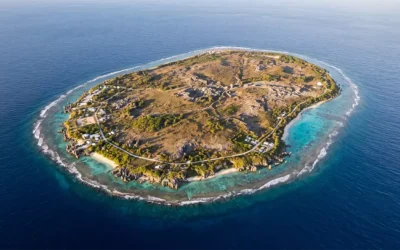
Nauru Is Now the Republic of Naoero: What It Means for the Citizenship Program
The Republic of Nauru has officially adopted the name Republic of Naoero. Citizenship Certificates now bear the new name; passports remain issued as Nauru during the transition.

EU Caribbean CBI Phase-Out by 2028: What the Visa Suspension Mechanism Means for Investors
The EU’s revised Visa Suspension Mechanism now treats CBI programme operation itself as suspension grounds. Antigua & Barbuda, Dominica, Grenada, St Kitts & Nevis, and Saint Lucia have reportedly been asked to phase out by 1 June 2028.

UAE Tourist Identity: Instant Digital Bank Account Launch
The Central Bank of the UAE, ICP, and ADCB have launched a digital identity-linked banking service allowing non-resident visitors to open an account and receive a debit card within minutes of arrival.
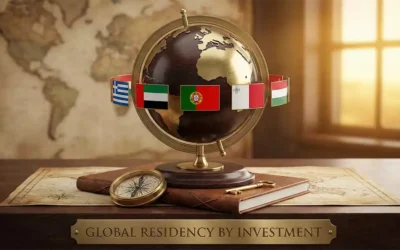
Best Residency by Investment Programs 2026
Compare 10 residency by investment programs in 2026: Greece, UAE, Portugal, Malta, Hungary, Germany, Latvia, Cyprus, USA EB-5, Türkiye. Analysis by NTL International.