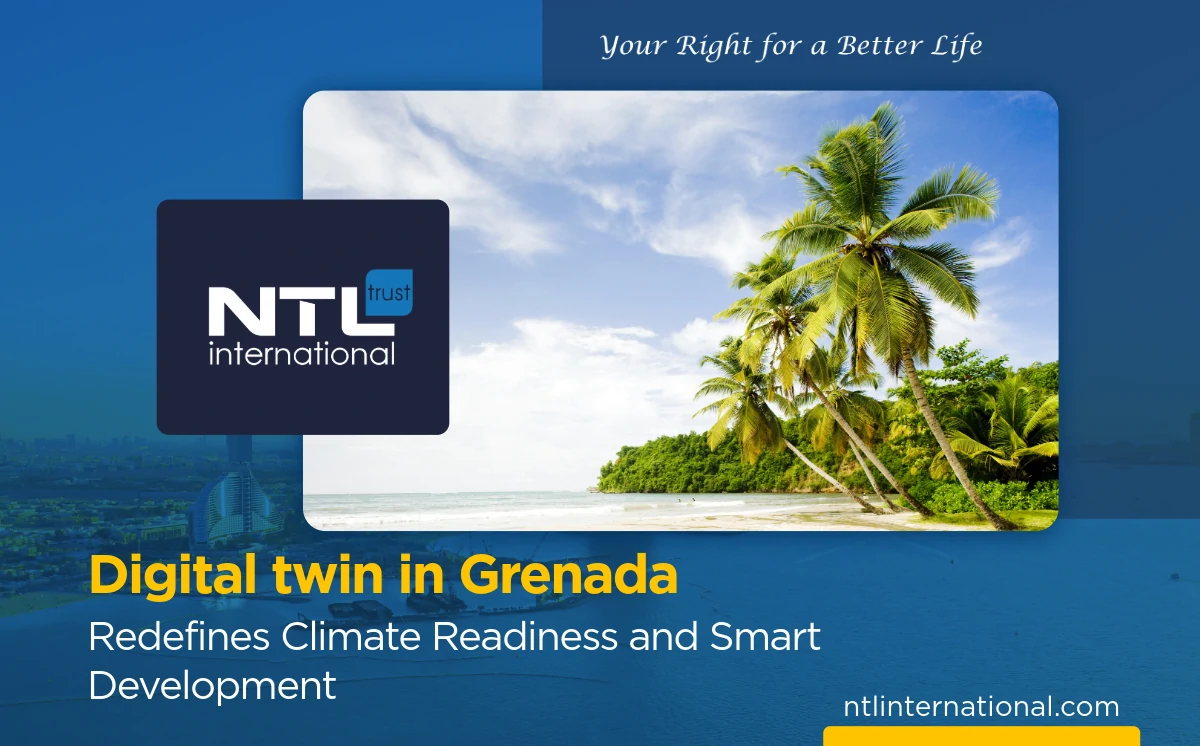
The Digital Twin in Grenada is a groundbreaking initiative designed to address the growing challenges of climate change. It provides an advanced 3D model of the island, serving as a strategic tool for smart planning, disaster preparedness, and environmental resilience. Grenada is among the first small island nations to adopt such cutting-edge digital technology for managing climate risks, as well as guiding urban and economic development.
When Did the Digital Twin in Grenada Begin?
The initiative officially began in 2019, launched under the World Bank’s Regional Disaster Vulnerability Reduction Project in partnership with Fugro. Through extensive aerial and marine surveys, the project collected highly accurate data, including:
-
High-resolution LiDAR point clouds
-
High-quality aerial imagery
-
Bathymetric data for coastal areas
By around 2021, this data was transformed into a dynamic 3D model of the island, Grenada’s Digital Twin. The model is now used to simulate future climate scenarios such as sea-level rise, flooding, and hurricanes, helping the nation safeguard infrastructure, plan coastal protection, and prioritize sustainable development.
Why the Digital Twin in Grenada Matters
For small island states like Grenada, where the impacts of climate change are magnified, access to accurate geospatial data is not optional, it is essential. The Digital Twin in Grenada allows the government to:
-
Proactively prepare for floods and natural disasters
-
Guide urban development based on risk predictions
-
Support investment in sustainable and resilient infrastructure
-
Strengthen long-term climate change adaptation strategies
Linking Technology with Development and Investment
Grenada also offers an official Citizenship by Investment Program, and innovations such as the Digital Twin add significant value for investors. These advancements highlight the country’s commitment to ecological stability, disaster readiness, and smart development. With continued investment in geospatial technology and digital infrastructure, Grenada is positioning itself as a forward-looking nation where economic growth and environmental sustainability go hand in hand.
Digital Twin in Grenada as a Roadmap for Other Nations
Grenada’s pioneering use of digital technology is already inspiring other Caribbean and international nations. The Digital Twin in Grenada demonstrates how data-driven solutions can directly address climate challenges while supporting safer, more stable, and future-ready communities.

US Visa Bond Program Becomes Permanent: Impact on Antigua and Barbuda, Dominica, Grenada, and Vanuatu Citizenship by Investment
The US Department of State has made its B-1/B-2 visa bond program permanent, effective 3 August 2026, raising bond amounts to $10,000-$20,000. Citizenship by Investment without a residency requirement remains an explicit qualifying criterion, directly affecting Antigua and Barbuda, Dominica, Grenada, and Vanuatu.
Nauru Is Now the Republic of Naoero: What It Means for the Citizenship Program
The Republic of Nauru has officially adopted the name Republic of Naoero. Citizenship Certificates now bear the new name; passports remain issued as Nauru during the transition.

EU Caribbean CBI Phase-Out by 2028: What the Visa Suspension Mechanism Means for Investors
The EU’s revised Visa Suspension Mechanism now treats CBI programme operation itself as suspension grounds. Antigua & Barbuda, Dominica, Grenada, St Kitts & Nevis, and Saint Lucia have reportedly been asked to phase out by 1 June 2028.

UAE Tourist Identity: Instant Digital Bank Account Launch
The Central Bank of the UAE, ICP, and ADCB have launched a digital identity-linked banking service allowing non-resident visitors to open an account and receive a debit card within minutes of arrival.

Best Residency by Investment Programs 2026
Compare 10 residency by investment programs in 2026: Greece, UAE, Portugal, Malta, Hungary, Germany, Latvia, Cyprus, USA EB-5, Türkiye. Analysis by NTL International.